英語の後に日本語が続きます。
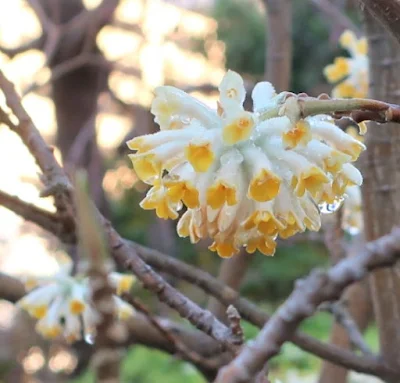
The Oriental paperbush (Edgeworthia chrysantha) has started to bud. It is called
mitsumata in Japan because its stems always split into three (
mitsu) prongs (
mata).
Oriental paperbush (Edgeworthia chrysantha),
kozo (Broussonetia), and
gampi (Diplomorpha sikokiana) are the primary materials used to make washi, or traditional Japanese paper. Oriental paperbush is also well known as the raw material for banknotes. In Japan, Oriental paperbush and
kozo are depreciated over a useful life of five and nine years, respectively, whereas
gampi is not. I didn't know plants counted as depreciable assets.
 |
| 3/23/2022 |
 |
| 2/27/2024 |
 |
| 2/27/2024 |
 |
| 2025/1/3 |
 |
2025/1/3
|
 |
| 2/27/2024 |
 |
| 2/4/2024 |
 |
| 2/4/2024 |
 |
| 2/4/2024 |
 |
| 2/4/2024 |
 |
| 3/23/2022 |
 |
| 2020/2/1 |
 |
| 1/6/2022 |
 |
| 1/6/2022 |
 |
| 1/19/2021 |
 |
| 1/19/2021 |
 |
| 1/19/2021 |
 |
| 2/27/2020 |
(If you wish to post your comment but don't have a Google account, select "anonymous" from the drop down menu titled "comment as"!)
ミツマタ(三椏)です。枝が三叉(みつまた)に分かれるのでこの名が付いたとのことですが、本当に三叉に分かれているか確認するの忘れました😅。
ところで三椏は、楮、雁皮とともに和紙の原料です。そして三椏と楮はそれぞれ5年または9年で償却されます。ところが雁皮は償却されません。どうしてなんだろう?調べたのですが分かりませんでした。
(Google アカウントを持ってない方は、コメント記入後に「Google アカウント」をクリックし、「匿名」か「名前/URL」を選択してからご記入ください!)


0 件のコメント:
コメントを投稿