英語の後に日本語が続きます。
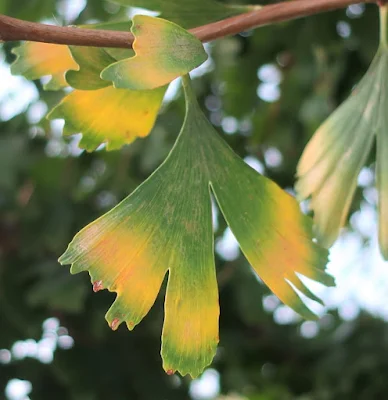
Ginkgo (Ginkgo biloba) is native to China but can now be found across Japan. The tree, a gymnosperm plant, has male and female trees. The male trees have catkin like male flowers from April to May, which produce pollen, while the female trees have female flowers also from April to May and fruits from September to November.
 |
| 2024/11/30 |
 |
2025/11/1
|
In Central Tokyo, you can see many ginkgo trees but most of them in the office district are male to prevent people from stepping on the fruits. Ginkgo fruits are notorious for their stinkiness (as you know😆) like something rotten when raw but considered one of the autumn delicacies in Japan. Also, its leaves turn bright yellow (or golden!) beautifully in autumn (and if you want to know why, read
The Process of Leaf Color Change).
But you can't miss another thing about gingko, that is, its flowers. One day I found male flowers scattered on the ground, which looked to me like dead caterpillars😱 (scroll down)! I've never seen the female flowers yet.
 |
| 2026/4/16 Male flowers |
 |
| 2026/4/16 Male flowers |
 |
| 2026/4/16 Male flowers |
 |
2025/11/10
|
 |
| 2024/11/30 |
 |
2025/11/1
|
 |
| 2025/11/1 |
 |
| 2024/11/30 |
 |
| 2024/10/10 |
 |
| 2024/10/10 |
 |
| 2024/10/10 |
 |
| 2021/12/5 |
 |
| 2021/12/5 |
 |
| 2021/11/20 |
 |
| 2021/11/20 |
(If you wish to post your comment but don't have a Google account, select "anonymous" from the drop down menu titled "comment as"!)
イチョウ(銀杏)です。中国原産ですが日本中に植えられています。裸子植物で雌雄異株。都心は通行人が臭い実を踏まないように雄が多いのですが、もちろん雌の木もあり、実が生ると本当に臭いです。でも青空に映える黄金色の銀杏の葉の美しさは格別です。それにギンナンはお酒に合う。。。
でも銀杏ってそれだけじゃないんです。花です♪ 雄花と雌花があるのですが、雄花は柳の花穂のようです。でも地面に散乱している雄花は私には青虫の死骸にしか見えない😱。。。(上の写真をご覧ください。)
ちなみに紅葉(黄葉)のメカニズムですが、
毎日新聞によると「気温が下がり、日照時間が短くなると、葉への栄養供給が止まる。その結果、クロロフィルが分解され、別の色素と作用して色付く」とのことです。
(Google アカウントを持ってない方は、コメント記入後に「Google アカウント」をクリックし、「匿名」か「名前/URL」を選択してからご記入ください!)


0 件のコメント:
コメントを投稿