英語の後に日本語が続きます。
Passionflowers (Passiflora caerulea) are native to South America and are said to have been introduced to Japan during the Kyoho period (1716–1735).
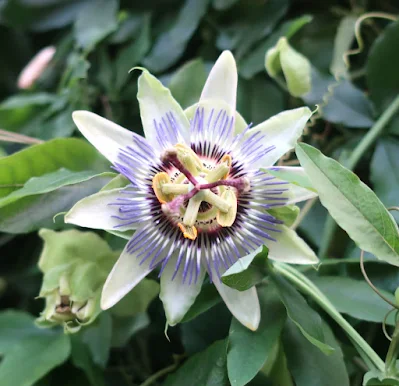
Their most striking feature is, needless to say, the pistils, which closely resemble the hands of a clock. This is why they're called
tokeisou in Japan—which translates to 'clock flower.' But you know what? This clock doesn't work in the morning, because the pistils just stand straight up (as you can see in the first photo) and can't tell the time!
 |
| 6/8/2024 |
 |
| 5/1/2023 Passiflora caerulea - it's ten past ten! 時計草 - 10時10分です! |
 |
| 5/1/2023 |
 |
| 6/8/2024 |
 |
| 6/8/2024 |
 |
| 6/8/2024 |
 |
| 6/8/2024 |
 |
| 5/12/2024 |
 |
| 5/12/2024 |
 |
| 5/12/2024 |
 |
| 8/27/2023 |
 |
| 8/27/2023 |
 |
| 8/27/2023 |
 |
| 5/1/2023 |
 |
| 5/1/2023 |
 |
| 10/10/2022 |
 |
| 10/10/2022 |
 |
| 10/10/2022 |
 |
| 10/10/2022 |
 |
| 5/25/2021 |
(If you wish to post your comment but don't have a Google account, select "anonymous" from the drop down menu titled "comment as"!)
トケイソウなのに「時計」じゃないときがあるってご存じでしたか。実はトケイソウが時計ソウなのは開花後しばらくしてから。午前中は時計の針🕙(雌しべ)がまだ寝ていて、全部上を向いちゃってるんです😪(1枚目)。使えない時計です。。。
(Google アカウントを持ってない方は、コメント記入後に「Google アカウント」をクリックし、「匿名」か「名前/URL」を選択してからご記入ください!)


0 件のコメント:
コメントを投稿