英語の後に日本語が続きます。
These are mixed color morning glories. Every color is so beautiful. Morning glories are very popular in Japan. Elementary schools grow morning glories in summer to teach students about plants (I was one such student!) and many municipalities hold morning glory festivals in summer.
You may believe that the plant name morning glory was given because the flowers open in the morning, but that's not true. Morning glory goes to sleep as it gets dark and wakes up (i.e., the flower opens) after nine hours of sleep. They live healthy lives!😉
Hi! I'm Kei Narujima. This is a blog about flowers, plants, and bugs I saw in CENTRAL Tokyo, and sometimes art and Japanese culture that bring you a smile or make you think (or so I hope)!! こんにちは。花や虫、そして時々日本の文化などについて書いてます😊。
Blue Dawn Flower ノアサガオ(野朝顔)
英語の後に日本語が続きます。
Blue dawn flowers or blue morning glories (Ipomoea indica) are native to subtropical and tropical areas (including southern Japan) and can now be found across the country including the mainland. Unlike other morning glories (e.g., Ipomoea nil), this morning glory produces flowers for nearly half a year in Japan from June to November, suggesting its hardiness.
Blue morning glories are larger, about 10 cm in diameter. They're hardy or in other words invasive and for that, they're designated as an invasive plant in Japan and other countries.
I thought the bee in the center of the blue dawn flower in the first two photos was dead because it didn't move at all even if I touched the flower gently. So, I touched it less gently and less and less... Then the bee woke up and flew away. OMG! It must have been in a dream where it's having a sumptuous feast after such a feast. Sorry...
| 2026/6/16 |
| 2026/6/16 |
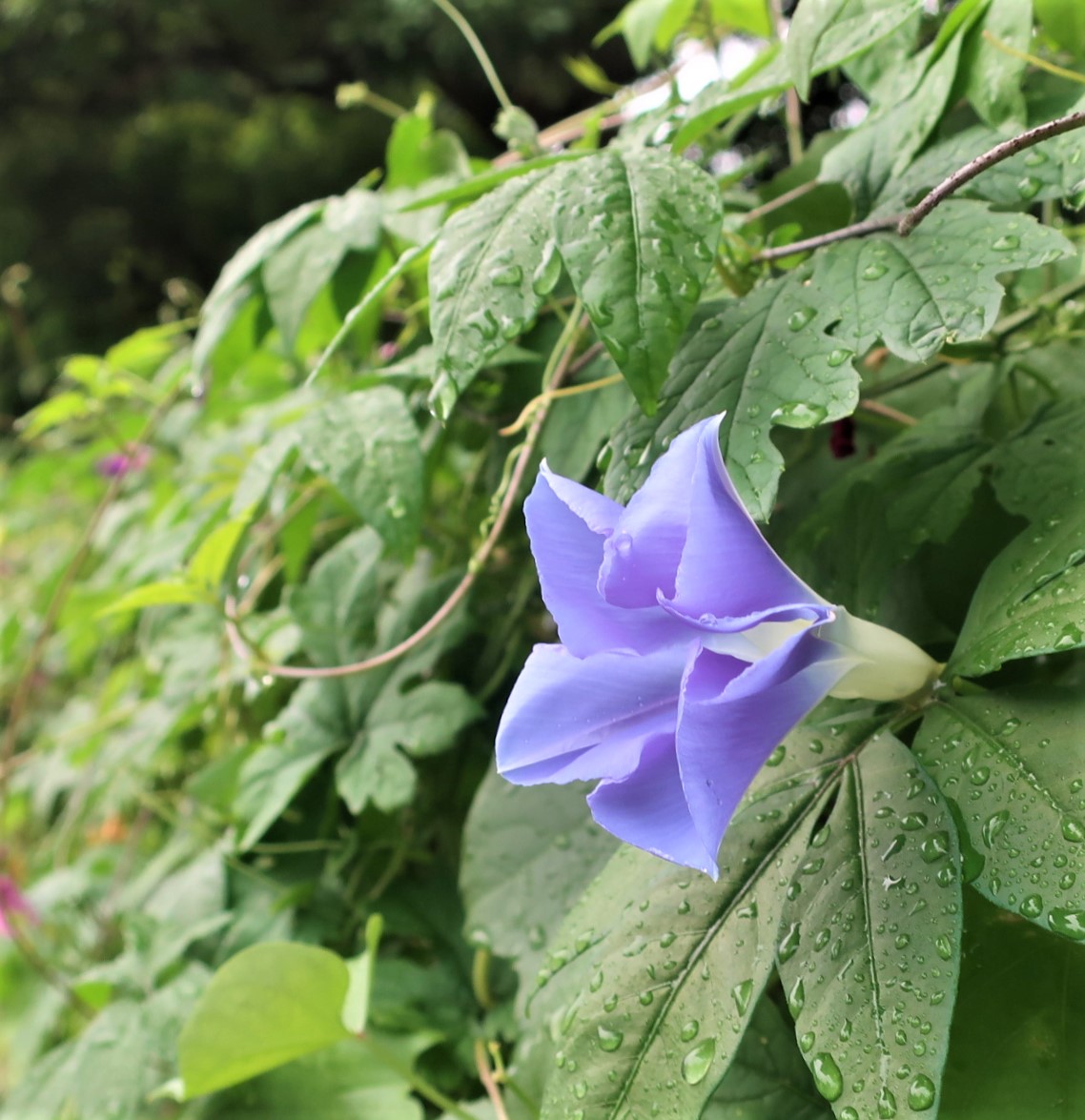
Pale Blue Morning glory 水色のアサガオ(朝顔)
英語の後に日本語が続きます。
The contrast between the pale blue flower and the deep green leaf is so refreshing!
White Morning Glory (Ipomoea Lacunosa) マメアサガオ(豆朝顔)
英語の後に日本語が続きます。
Summer has not started yet (i.e., the rainy season isn't over) but it's already been really hot and humid across Japan. So, I almost gave up on finding a plant for this blogpost and then I saw them, white morning-glories (Ipomoea lacunosa). They're a type of morning glories but very small, like 2cm in diameter, but beautiful enough to cheer me (who was exhausted from walking) up.
Star Shaped Morning Glory 星形のアサガオ
Japanese follows English. 英語の後に日本語が続きます。
Ignorance makes your life less colorful. I knew that morning glories produce flowers in various colors but not that the blooms can be of various shapes. But look at the flowers in the first three photos. They're star shaped, which I assumed were still closed...
It's still hot in Tokyo, but you can feel the autumn breeze (though slightly) in the early morning. To mark the beginning of the end of the morning glory season this year, I have included various colors of morning glory blooms, too. I hope you enjoy them!😊
White Morning Glory (Ipomoea Lacunosa) 白い朝顔(アサガオ)
英語の後に日本語が続きます。
This is Ipomoea lacunosa or more commonly known as the whitestar and white morning glory. The purple and pink ones are usual, but the white and yellow (which is beautiful, too!) morning glories are not, are they? The white flower is beautiful itself, but it's more so among the deep green leaves.
I was surprised that the white morning glory is a result of a mutation, i.e., deficiency of a certain gene.
Yellow Morning Glory (Ipomoea Ochracea) 黄色の朝顔(アサガオ)
Japanese follows English. 英語の後に日本語が続きます。
This is ipomoea ochracea or a yellow morning glory in my neighborhood. It's surrounded by bright purple flowers, my favorite. I knew that morning glory produces flowers in various colors, but it was my first time to see a yellow one.
It's native to Central America and Mexico, but the flowers are loved so much in Japan that morning glory markets are held in summer in many places across the country.
Interestingly, morning glory is a kigo (i.e., season word) to indicate autumn, used in traditional forms of Japanese poetry, such as haiku. This inconsistency may be because in the traditional Chinese calendar, which was also used in Japan, autumn usually begins around August 7.
![]() |
| Ipomoea ochracea 黄色の朝顔 |
![]() |
| A yellow morning glory and purple ones 黄色と紫のアサガオ |
Morning Glories Need 9 Hours of Sleep😉 アサガオは9時間睡眠😉
英語の後に日本語が続きます。
These pink and purple ipomoea nil or Japanese morning glories are so beautiful. I found them on August 12.
August 12 is five days after the Liqiu or the beginning of autumn in the Chinese calendar. The Liqiu in Japan this year was August 7, but it's still hot and many morning glories, i.e., the symbol of summer together with sunflowers in Japan, are still in bloom.
People believe that morning glory flowers open in the morning, but that's not true. They open in the morning in summer, but as the days get shorter, they open in the middle of the night because they wake up nine hours after it gets dark. Morning glory goes to sleep as it gets dark and wakes up after nine hours of sleep. They live healthy lives!😉
Ipomoea Hederacea (Ivy-Leaved Morning Glory) & Ipomoea Indica (Blue Dawn Flower) 琉球朝顔とアメリカアサガオ
英語の後に日本語が続きます。
These are morning glories. The smaller pale blue ones are ipomoea hederacea or more commonly ivy-leaved morning glory and the larger purple ones are ipomoea indica or commonly blue dawn flower. Both morning glories are in the same place, making me realize that they're both pretty but in a different way.
In Japanese, ivy-leaved morning glory is called "American morning glory" and blue dawn flower "Ryukyu morning glory." Ryukyu is the name of the place currently called "Okinawa" prefecture, which accounts for only 0.6% of total land area in Japan but has 70% of US military bases and facilities in Japan. This is unfair, a terrible legacy of WW2 and the result of ongoing discrimination against Okinawans. Okinawa and the US both mean a lot to me. Naturally I love both morning glories.
These are morning glories. The smaller pale blue ones are ipomoea hederacea or more commonly ivy-leaved morning glory and the larger purple ones are ipomoea indica or commonly blue dawn flower. Both morning glories are in the same place, making me realize that they're both pretty but in a different way.
In Japanese, ivy-leaved morning glory is called "American morning glory" and blue dawn flower "Ryukyu morning glory." Ryukyu is the name of the place currently called "Okinawa" prefecture, which accounts for only 0.6% of total land area in Japan but has 70% of US military bases and facilities in Japan. This is unfair, a terrible legacy of WW2 and the result of ongoing discrimination against Okinawans. Okinawa and the US both mean a lot to me. Naturally I love both morning glories.
Morning Glory - Various Leaf Forms 朝顔の葉っぱいろいろ
Japanese follows English. 英語の後に日本語が続きます。
(Google アカウントを持ってない方は、コメント記入後に「Google アカウント」をクリックし、「匿名」か「名前/URL」を選択してからご記入ください!)
I've been watching the growth of morning glories for the past several weeks. Some were still buds while others in full bloom. Also, some were up above and others hiding under leaves, but can you tell the differences among these pretty and gorgeous flowers other than the color?
The answer is the leaf form!! There are at least nine leaf forms for morning glories. Did you know that? So, now, let's focus on the form of their leaves! (Source: Various leaf forms of the varied (mutant) Japanese morning glory)
| 2. Another general 並葉・常葉 |
| 3. Round heart shaped - Ants are busy working 丸葉 - アリさん、大忙し! |
| 4. Maple leaf shaped 立田葉? |
Morning glories in 1, 2 and 3 are all purple and look completely the same, but although the leaf shape in 1 and 2 is the same, it's different from that in 3. And look at Picture 4. It has at least two maple-leaf shaped leaves divided into five lobes. Wow, that's why it's fun knowing things!
According to the website, the Japanese morning glory has nine types of leaf shapes, and I've found three of them, which has increased the fun for my morning walk😊!
(If you wish to post your comment but don't have a Google account, select "anonymous" from the drop down menu titled "comment as"!)
ここのところアサガオをずっと見ていました。紫の花が上や下やいろんなところにたくさん咲いています。。。 で、きづいたんです。みんな同じに見えるけど葉っぱの形が違うではないか!
According to the website, the Japanese morning glory has nine types of leaf shapes, and I've found three of them, which has increased the fun for my morning walk😊!
(If you wish to post your comment but don't have a Google account, select "anonymous" from the drop down menu titled "comment as"!)
ここのところアサガオをずっと見ていました。紫の花が上や下やいろんなところにたくさん咲いています。。。 で、きづいたんです。みんな同じに見えるけど葉っぱの形が違うではないか!
アサガオって9種類も葉の形があるんですね。で、私が見つけたのは「並」、「丸」そして「立田」の3種類。これから朝歩く時の楽しみが増えました😊
(Google アカウントを持ってない方は、コメント記入後に「Google アカウント」をクリックし、「匿名」か「名前/URL」を選択してからご記入ください!)
登録:
投稿 (Atom)
Confederate Rose (Hibiscus Mutabilis cv. Versicolor) スイフヨウ(酔芙蓉)
英語の後に日本語が続きます。 These are Confederate roses (Hibiscus mutabilis cv. versicolor) and the first five photos are of one flower, taken at 10:00, ...
-
英語の後に日本語が続きます。 This is the best shot I could get. It's a female Joro spider, I think. I noticed her spider web first several months ago ...
-
英語の後に日本語が続きます。 I often mistake horseflies for bees, but I believe this is a bee, maybe a bumblebee!!?? If so, it's my first time to see ...