ラベル ★Color - Red(赤) の投稿を表示しています。 すべての投稿を表示

Fruits of Cornus Florida (Flowering Dogwood) 花水木(ハナミズキ)の実

英語の後に日本語が続きます。

These are fruits (drupes) of Cornus florida or dogwood flowers. The fruits don't resemble those of Cornus kousa but the flowers of the two Cornus species do. You may not know but the autumn leaves of Cornus florida are gorgeous. 

2026/7/31

Hydrangea 'Magical Revolution' マジカルレボリューション

英語の後に日本語が続きます。

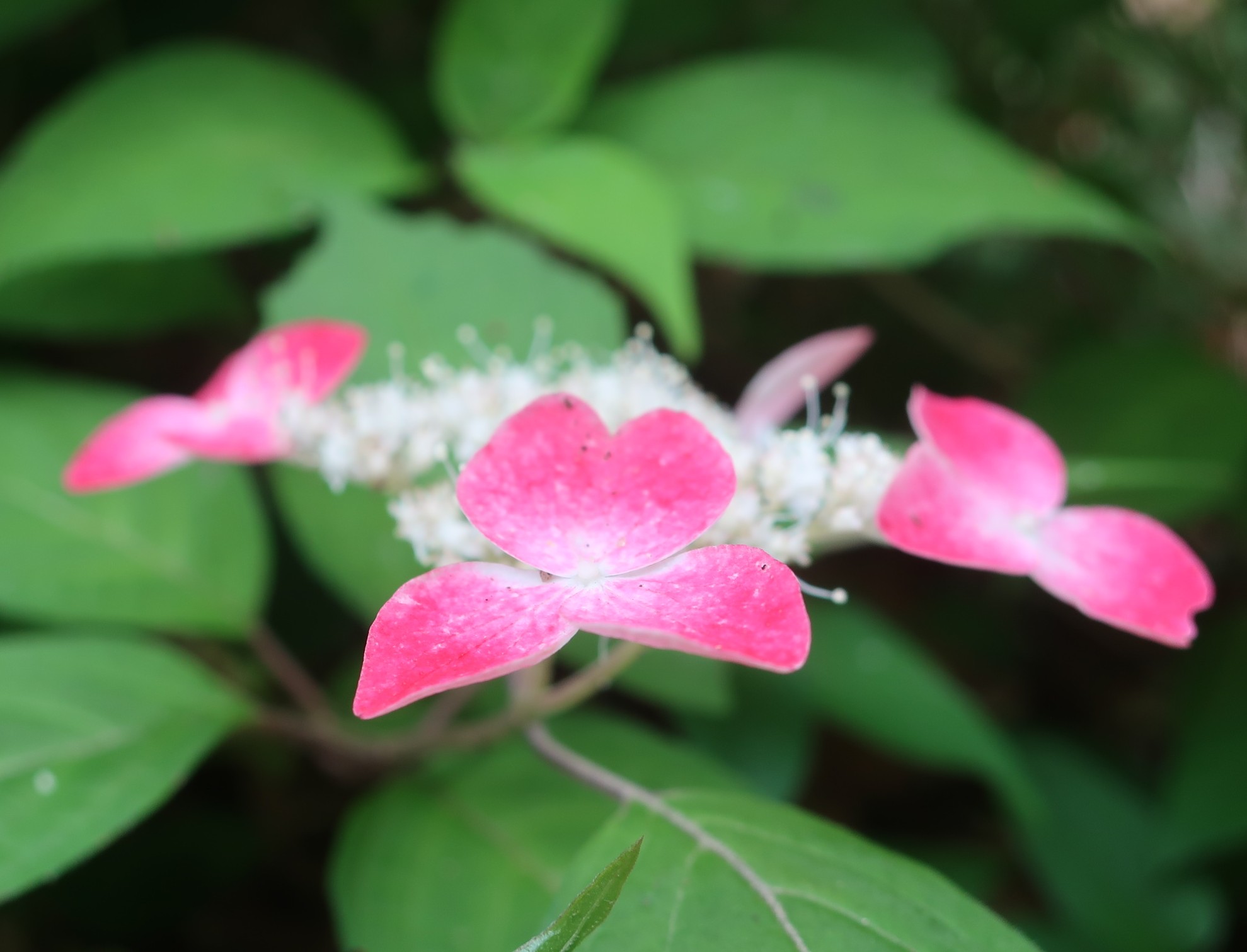
Hydrangea macrophylla 'Magical Revolution' is really magical from two perspectives. Firstly, its spectacular, color-shifting transformation. The hydrangea changes from pale pink, blue, and green in early summer to red toward autumn. (Scroll down!) Secondly, its long life! The hydrangea's sepals (not petals!) are so sturdy that they can bloom for two to three months while changing color.  

It changes color to red in autumn due to increasing anthocyanin resulting from a change in the temperature and/or the amount of ultraviolet radiation. For whatever the reason, the hydrangea is just magically amazing. 


2026/5/29

2026/6/2

Asian Jumpseed (Persicaria Filiformis) ミズヒキ(水引)

英語の後に日本語が続きます。

The Asian Jumpseed (Persicaria filiformis) is native to East, South, and Southeast Asia and can be found across Japan, producing tiny flowers from August to October. The plant has no petals instead has four sepals, of which three are red and the other is white. Its Japanese name is "mizuhiki," i.e., an ancient Japanese artform of knot-tying, most commonly used to decorate Japanese ceremonial envelopes.

2026/7/5

East Asian Mallotus (Mallotus Japonicus) アカメガシワ(赤芽柏)

英語の後に日本語が続きます。

East Asian mallotus (Mallotus japonicus) is native to East Asia and can be found across Japan. The tree is dioecious, producing male and female flowers on separate trees from June to July. The trees in this post are all female with female flowers, producing clusters of fruits and seeds (scroll down) in two months. The three to four branched red parts of the female flowers are stigmas.

2026/6/29

Trailing Abutilon (Abutilon Megapotamicum) ウキツリボク(浮釣木、チロリアンランプ)

英語の後に日本語が続きます。

The trailing abutilon (Abutilon megapotamicum) is indigenous to Brazil, was imported to Japan during the Meiji period (1868-1912), and can now be found across the country. It produces lantern shaped flowers from May to October in Japan. The red part that looks like a lantern is sepals, the yellow part is petals, and the protruding brown thing is the style.  

2026/6/21

Lily (Lilium) ユリ(百合)

英語の後に日本語が続きます。

Lilies are native to Asia, Europe, and North America. There are more than 100 wild species around the world and 15 in Japan, producing flowers in various colors from May to August in Japan, of which I've seen pale pink, yellow (scroll down), red (Blackout red), and orange (Thunberg orange). The lily bulb (mainly the Maximowicz's lily's [Lilium leichtlinii]) is edible, often steamed, sauteed or deep-fried (i.e., tempura), as a seasonal delicacy in Japan. So, if you have a chance to come to Japan in winter, don't miss eating lily bulb or "yurine" TEMPURA to enjoy its soft and fluffy texture.  

The lily's Japanese name is "yuri" after the term "yusuri," which means shaking or trembling, because lilies shake and/or tremble in the wind as their stems are thin but the flowers are big.

2026/6/19

Chinese Bayberry (Myrica Rubra) ヤマモモ(山桃)

英語の後に日本語が続きます。

The Chinese bayberry (Myrica rubra) is native to eastern Asia and can be found across Japan. The tree can be big like 25 meters tall, producing fruits which are yellow and then turn red high up there. That's why I don't realize there are Chinese bayberry trees until I see some red fruits on the ground. The ruby red berries are beautiful but not only that. The flowers are cute, too, like fluffy cat tails (scroll down to see them). 

2021/6/10

Hollyhock (Alcea Rosea) 立葵(タチアオイ)

英語の後に日本語が続きます。

Hollyhocks (Alcea rosea) are native to Turkey and East Europe but can be found across Japan. The plant produces single and double flowered white, pink, purple, and red flowers (scroll down!) from June to August in Tokyo. Their Japanese name is "tachi aoi," which translates into "standing mallow," and mallows have a special connotation in Japan. 

"Mitsuba aoi," which translates to "three leafed mallow," is the crest of the Tokugawa clan, who ruled Japan during the Edo period (1603-1868). This is known nationwide even now because of a long run "samurai" television program about Mitsukuni Tokugawa (1628-1701), one of the grandchildren of Ieyasu Tokugawa, the founder and first shogun of the Tokugawa shogunate of Japan. This period drama was aired initially from 1969 to 2011 and is still rerun now.   

In the drama, Mitsukuni travels throughout the country incognito to discover and investigate injustice and in the end defeats and punishes corrupt samurai and merchants. At the end of each episode, Mitsukuni (or more specifically, one of his two samurai retainers) brandishes an "inro" pillbox with the "three leafed mallow" crest to reveal Mitsukuni's identity, i.e., a member of the Tokugawa clan. (By the way, although Mitsukuni existed and was a relation of the shogun, the drama episodes are all fictional.)

Interestingly, however, the Tokugawa clan's crest is not "three leafed mallow" actually but Asarum caulescens Maxim., which is a very plain, two-leafed or heart shaped plant. The Tokugawa clan's crest, three-leafed mallow, is said to be modeled on this plain plant.

Then, another question comes up. Why did someone who wanted to rule the country choose such a plain plant as their crest? One website says that many samurai clans during the age of warring states (1467-1615) chose plain plants as their crests to show that they were strong and hardy enough to survive in such harsh circumstances as these plants were. 

I found a (maybe) varied carpet beetle covered in pollen in the center of a white flower (the first 3 photos). The beetle must have been having breakfast but looked to me like playing with pollen by itself.   

2026/6/17

Coral Honeysuckle (Lonicera Sempervirens) 突抜忍冬(ツキヌキニンドウ)

英語の後に日本語が続きます。

The coral honeysuckle (Lonicera sempervirens) is native to North America, came to Japan during the Meiji period (1868-1912), and can now be found across Japan. One of its features is its bright red and orange blooms during May to September in Japan, which is shown in its English name while another is in its Japanese name "tsukinuki nindou," which translates into "penetrating honeysuckle," after the stem looking like penetrating a leaf.   

2025/4/29

Dock (Rumex) ギシギシがいっぱい

英語の後に日本語が続きます。

There are a variety of dock (Rumex) and those in these photos are some of them. I first tried to identify them like Japanese dock, spinach dock, common sorrel, etc., but gave up. Too many types and too subtle the differences are😂. But finding so many people discussing how to identify each dock on websites shows that the dock is loved around the world including Japan!

From a distance, the dock is just green (or sometimes red) leaves (or just weeds) but when looked closely, the plant shows tiny but beautiful cream/red perianth. The Japanese name of most types of dock contains the term "gishi gishi," which is Onomatopoeia, after the sound produced when the stems are rubbed (which I haven't tried). 

2026/5/27

Hydrangea Serrata Var. 'Kurenai' 紅山紫陽花(クレナイヤマアジサイ)

英語の後に日本語が続きます。

Kurenai hydrangea (Hydrangea serrata var. 'Kurenai') is a type of mountain hydrangeas. It starts to flower in early May and at that time its sepals (not petals!) are white and then turn red as suggested by the name kurenai, which means red. Because of such a color change, I often assume a kurenai hydrangea as a white hydrangea at first and realize it's a kurenai one after it turns red a week or two later. 

2025/5/25

False Strawberry (Potentilla Hebiichigo Yonek. et H.Ohashi) ヘビイチゴ(蛇苺)

英語の後に日本語が続きます。

False strawberries (Potentilla hebiichigo Yonek. et H.Ohashi) are native to east to south Asia and can be found across Japan. False strawberries produce yellow flowers from April to June and berries at almost the same time. The berries are edible and look delicious, but tasteless and that's why in Japan they're called "hebiichigo" as contained in its scientific name, which translates into "snake strawberries" or "strawberries for snakes." 

False strawberries (Potentilla hebiichigo Yonek. et H.Ohashi) resemble another type of false strawberry (Potentilla indica) very much but there's a clear difference, i.e., the former's receptacle is white while the latter's is red and glossy. Both false strawberries produce yellow flowers from April to May in Japan (scroll down) but I was able to find them only once (2nd photo).   

2026/5/17

2026/5/14

Bottlebrush (Callistemon) ブラシノキ(金宝樹)

英語の後に日本語が続きます。

Names and natures often agree and so do bottlebrush (Callistemon) trees. Bottlebrush (Callistemon) is native to Australia but can be found across Japan. Bottlebrush is known in Japan as "burashi no ki," which translates into "brush tree" (easy to understand), but also "kinpouju," which translates into "golden treasure tree," due to their anthers, which turn golden as they fill with pollen. 

I still remember when I saw them for the first time. I was so surprised that I climbed a wall surrounding the tree to take their close-up photos without realizing how dangerous it could be. So reckless, but I couldn't resist. Luckily, I wasn't hurt!

Some flowers in the post are pink, called Callistemon 'Pink Champagne.'

2026/5/14 Pink champagne 

2026/5/14

Maple Samara 楓(カエデ)の翼果

英語の後に日本語が続きます。

Maple trees are known for autumn leaves but reddish and green (and translucent) samaras surrounded by fresh green leaves are so beautiful. Maple samaras always remind me of Doraemon bamboo copter.  

2026/5/12

2026/4/22

Mountain Laurel (Kalmia Latifolia) カルミア(亜米利加石楠花、アメリカシャクナゲ)

英語の後に日本語が続きます。

Mountain laurels (Kalmia latifolia) are native to the eastern United States but can now be found across Japan, producing flowers varying from white to pink in May and June in Japan. The flowers look like parasols when open and the buds konpeito, i.e., tiny star-shaped Japanese sugar candies, which are Pokémon Nebby's favorite food.

Konpeito was imported from Portugal to Japan in the 16th century together with the name "confeito" in Portuguese, meaning sugar candy. If you haven't seen the candy, click here (Wikipedia). See? The buds of mountain laurel look exactly like konpeito, don't they?

Despite such lovely appearance, however, all the parts of Kalmia are poisonous especially for sheep as suggested by its other common names "lamb-kill," "calf-kill," "kill-kid," and "sheep-poison."

2025/5/24

2026/5/9

Mulberry (Morus) クワ(桑)

英語の後に日本語が続きます。

Mulberry (Morus) is native to China and Korea, coming to Japan in at the latest 12 century. The tree produces flowers in April and fruits from May to June, which are first green, turning to yellow, red and then deep purple. Mulberries are eaten raw or processed into jam and alcoholic drinks, which I've never tried.  

The fact the trees now have berries means that they had flowers in April but I missed them. In general, mulberries are dioecious, which means they have male and female flowers. Now I know where they are, I already look forward to seeing both male and female flowers next spring.    

2026/5/8

2026/5/7

Japanese Red Maple (Acer Pycnanthum) ハナノキ(花之木)

英語の後に日本語が続きます。

Japanese red maple trees (Acer pycnanthum) are native to Japan. Their Japanese name is "hananoki," translating to "flower tree," which is too general, isn't it? The tree is named as such after its deep red flowers standing out because they're produced before green leaves are in early spring when no other flowers are seen. This makes sense. I first found the flowers because the red color stood out in early March.  

2024/4/30

Red Flowering Dogwood (Cornus Florida) 赤い花水木(ハナミズキ)

英語の後に日本語が続きます。

Flowering dogwood (Cornus florida) is native to North America but can now be found across Japan, producing red, white, and cream white flowers from April to May. The dogwood was donated by the U.S. to Japan in 1915 in exchange for cherry trees, a gift of friendship from Japan to the U.S.

Flowering dogwood shows us not only beautiful flowers but also gorgeous leaves in autumn

2026/4/19

2026/4/19

Satsuki Azalea (Rhododendron Indicum) サツキ

英語の後に日本語が続きます。

Satsuki azalea (Rhododendron indicum) is native to Japan and can be found across the country. The plant produces white, pink, and red flowers from April to June in Japan. As azalea usually flowers in dense masses, they attract not only attention but also tourists and fee in some parks! 

2026/4/15

Japan categorizes azalea broadly into three types as follows:

Crimson Clover ベニバナツメクサ(紅花詰草)

英語の後に日本語が続きます。

Crimson clovers (Trifolium incarnatum) are native to Europe and West Asia, coming to Japan during the Meiji era (1868-1912) as forage crops. The clovers flower from April to June in Japan but die due to heat in summer.  

2026/3/15

2026/3/15

Sweet Viburnum (Viburnum Odoratissimum) サンゴジュ(珊瑚樹)

英語の後に日本語が続きます。 Sweet viburnum (Viburnum odoratissimum) is native to Asia and can be found across Japan. The tree produces clusters of white ...