英語の後に日本語が続きます。
Hi! I'm Kei Narujima. This is a blog about flowers, plants, and bugs I saw in CENTRAL Tokyo, and sometimes art and Japanese culture that bring you a smile or make you think (or so I hope)!! こんにちは。花や虫、そして時々日本の文化などについて書いてます😊。
I Found Your Name, Zao Gongen! 押出蔵王権現像
Japanese follows English. 英語の後に日本語が続きます。
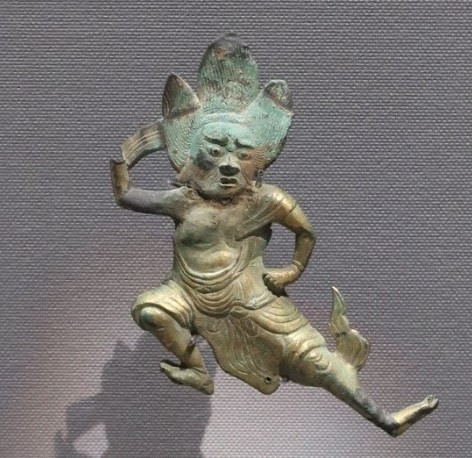
This 15cm tall artefact is a repousse image of Deity Zao Gongen on show at Tokyo National Museum. The image was made of gilt bronze in the 10th to 12th century in Japan and found at the peak of Mt. Omine, Nara prefecture.
I first wrote about him nearly a year ago, but because the museum didn't have his name at that time, I named him tentatively "Kung Fu Buddha"😜 (A staff member told me that they sometimes lost the background information of artefacts!!) One year has passed since then, and each time I went to the museum during the year, I checked if his name had been found, but in vain.... So, finding him still kung-fu-ing with his name on a nearby wall label a few days ago was a wonderful surprise!
Zao Gongen is the principal image of "shugendo," a mountain asceticism incorporating Shinto and Buddhist concepts, unique to Japan, also known as the principal image of Kinpusenji Temple, in Yoshino, Nara. Zao Gongen represents the truth about ultimate immortality, governing everything.
So, does this cute 15cm tall Kung Fu Deity govern everything in the world? If so, please give us a cure for Covid-19😜!!
The plaque below also has the deity's image, but the impression it gives us is completely different from that Kung Fu Buddha does.....
| Repousse image of Deity Zao Gongen or kung fu Buddha 押出蔵王権現像 又の名をカンフー仏陀(笑) |
Zao Gongen is the principal image of "shugendo," a mountain asceticism incorporating Shinto and Buddhist concepts, unique to Japan, also known as the principal image of Kinpusenji Temple, in Yoshino, Nara. Zao Gongen represents the truth about ultimate immortality, governing everything.
So, does this cute 15cm tall Kung Fu Deity govern everything in the world? If so, please give us a cure for Covid-19😜!!
The plaque below also has the deity's image, but the impression it gives us is completely different from that Kung Fu Buddha does.....
| Plaque with image of Deity Zao Gongen 銅板抽出蔵王権現像 |
(If you wish to post your comment but don't have a Google account, select "anonymous" from the drop down menu titled "comment as"!)
最初の写真、東京国立博物館の「押出蔵王権現像」です。平安時代に作られ、奈良県天川村の大峯山頂遺跡で見つかりました。
実は1年前にも書いたんです。ただその時は説明書きがなく、スタッフの人に聞いたところ「出自が分からないんです。よくあるんです。」と軽く言われてしまい、仕方なく勝手に「Kung Fu Buddha(カンフー仏陀)」と名付けました。
蔵王権現は、日本独自の山嶽仏教である修験道の本尊。奈良県吉野町の金峯山寺本堂(蔵王堂)の本尊として知られ、究極不滅の真理を体現し、あらゆるものを司る王だそうです。へーっ、こんなかわいい権現様が万物を司っている。。。 もしそうなら蔵王権現様、コロナ治療薬をください😜
2枚目の写真は「銅板抽出蔵王権現像」。同じく蔵王権現。でもカンフー仏陀とは全然違います。。。
(Google アカウントを持ってない方は、コメント記入後に「Google アカウント」をクリックし、「匿名」か「名前/URL」を選択してからご記入ください!)
Twelve Divine General Statue, Coronavirus and English 十二神将立像とコロナと英語
Japanese follows English. 英語の後に日本語が続きます。
Doesn't it look like dancing Michael Jackson, saying "Aow!"? Why is his left hand put there? This is Anila or the sheep general, one of the twelve divine generals or protective deities of the Medicine Buddha, at Tokyo National Museum. It was carved from wood in the 13th century in Japan.
(If you wish to post your comment but don't have a Google account, select "anonymous" from the drop down menu titled "comment as"!)
東京国立博物館の十二神将立像の中の未神です。左手が変じゃないですか、マイケルジャクソンでもないのに。。。 説明書きには何もありません。ところが英語の説明にはちゃんと書いてあるんです。もともと長い武器を持っていた(This figure originally held a long weapon...)と。。 じゃあ、何で日本語でもそう書いてくれないのでしょう。
肝心な情報が抜けている。これって似てません、民間の検査機関でコロナウィルスの検査ができない理由を政府が説明してくれない現象に。東日本大震災で原発が爆発した時もそうでした。奥歯に物が挟まったような言い方しかしない。。。 だからBBCをずっと見てました。
だから日本人、英語、勉強しなくちゃいけないんです。
(Google アカウントを持ってない方は、コメント記入後に「Google アカウント」をクリックし、「匿名」か「名前/URL」を選択してからご記入ください!)
Doesn't it look like dancing Michael Jackson, saying "Aow!"? Why is his left hand put there? This is Anila or the sheep general, one of the twelve divine generals or protective deities of the Medicine Buddha, at Tokyo National Museum. It was carved from wood in the 13th century in Japan.
![]() |
| Anila or the sheep general 13th century, Joruriji temple 十二神将立像 浄瑠璃寺 |
The answer to these questions is simple. According to the statue's exhibition tag in English, this general of sheep, one of the Japanese zodiac signs, originally held a long weapon... Okay, I got it. That makes sense... But why isn't such important information in the Japanese tag?
Its Japanese tag says where this statue is held (Joruriji temple, Kyoto) and who carved it (a member of the workshop of Unkei [1150-1223], one of the most famous Japanese sculptors in the Kamakura period), but has no mention of the missing long weapon.
This reminds me of the current situation in Japan where nobody has answered to a more urgent and important question! Who's been stopping private labs from doing new coronavirus tests??? It's also like after the explosion of Fukushima nuclear plants following the March 11, 2011 quake. Politicians and bureaucrats were so evasive that I had to watch BBC news programs.
And this is why Japanese people need to learn English...
Its Japanese tag says where this statue is held (Joruriji temple, Kyoto) and who carved it (a member of the workshop of Unkei [1150-1223], one of the most famous Japanese sculptors in the Kamakura period), but has no mention of the missing long weapon.
This reminds me of the current situation in Japan where nobody has answered to a more urgent and important question! Who's been stopping private labs from doing new coronavirus tests??? It's also like after the explosion of Fukushima nuclear plants following the March 11, 2011 quake. Politicians and bureaucrats were so evasive that I had to watch BBC news programs.
And this is why Japanese people need to learn English...
(If you wish to post your comment but don't have a Google account, select "anonymous" from the drop down menu titled "comment as"!)
東京国立博物館の十二神将立像の中の未神です。左手が変じゃないですか、マイケルジャクソンでもないのに。。。 説明書きには何もありません。ところが英語の説明にはちゃんと書いてあるんです。もともと長い武器を持っていた(This figure originally held a long weapon...)と。。 じゃあ、何で日本語でもそう書いてくれないのでしょう。
肝心な情報が抜けている。これって似てません、民間の検査機関でコロナウィルスの検査ができない理由を政府が説明してくれない現象に。東日本大震災で原発が爆発した時もそうでした。奥歯に物が挟まったような言い方しかしない。。。 だからBBCをずっと見てました。
だから日本人、英語、勉強しなくちゃいけないんです。
(Google アカウントを持ってない方は、コメント記入後に「Google アカウント」をクリックし、「匿名」か「名前/URL」を選択してからご記入ください!)
Four Heavenly Kings and Poor Little Devil 四天王立像と執金剛神立像
Japanese follows English. 英語の後に日本語が続きます。
They are the four heavenly kings carved from wood in the 14th century during the Kamakura period (1185-1333) in Japan. These kings are said to watch over the four cardinal directions.
They look so strong, masculine, and more human compared to Buddha statues, who generally don't show any emotions.... But I can show you a more human god and a devil.
The above photos are of Vajrapani, the protector and guide of Buddha, dragging a poor little "oni" or Buddhist devil. My husband, when looking at them, murmured, "It's like you and me..." and hurried away to see the next sculpture without responding to my question, "Which is which???"......
(If you wish to post your comment but don't have a Google account, select "anonymous" from the drop down menu titled "comment as"!)
上から増長天、持国天、広目天、多聞天です。それぞれ南方、東方、西方、北方を護っているそうです。真面目な仏様(仏像)よりこういう「人間くさい」像の方が好きです。。。
でももっと人間くさい神様がいらっしゃいます。竹内久一作「執金剛神立像」です。鬼を引きずる姿に、見た瞬間噴き出してしまいました。主人曰く「まるで僕たちのようだね」。どっちがどっちかはご想像にお任せします。。。
(Google アカウントを持ってない方がコメントする場合は、「Google アカウント」をクリックし、「匿名」か「名前/URL」を選択してからご記入ください!)
They are the four heavenly kings carved from wood in the 14th century during the Kamakura period (1185-1333) in Japan. These kings are said to watch over the four cardinal directions.
![]() |
| Zochoten (Virūḍhaka) Guardian of the south 増長天 南を守護 |
![]() |
| Jikokuten (Dhataraṭṭha) Guardian of the east 持国天 東を守護 |
![]() |
| Komokuten (Virūpākṣa) Guardian of the west 広目天 西を守護 |
![]() |
| Tamonten (Vaiśravaṇa) Guardian of the north 多聞天 北の守護 |
They look so strong, masculine, and more human compared to Buddha statues, who generally don't show any emotions.... But I can show you a more human god and a devil.
![]() |
| Poor little devil dragged by Vajrapani 執金剛神に引きずられる鬼 |
![]() |
| Statue of Vajrapani by Kyuichi Takenouchi, wood 執金剛神立像、竹内久一 |
The above photos are of Vajrapani, the protector and guide of Buddha, dragging a poor little "oni" or Buddhist devil. My husband, when looking at them, murmured, "It's like you and me..." and hurried away to see the next sculpture without responding to my question, "Which is which???"......
(If you wish to post your comment but don't have a Google account, select "anonymous" from the drop down menu titled "comment as"!)
上から増長天、持国天、広目天、多聞天です。それぞれ南方、東方、西方、北方を護っているそうです。真面目な仏様(仏像)よりこういう「人間くさい」像の方が好きです。。。
でももっと人間くさい神様がいらっしゃいます。竹内久一作「執金剛神立像」です。鬼を引きずる姿に、見た瞬間噴き出してしまいました。主人曰く「まるで僕たちのようだね」。どっちがどっちかはご想像にお任せします。。。
(Google アカウントを持ってない方がコメントする場合は、「Google アカウント」をクリックし、「匿名」か「名前/URL」を選択してからご記入ください!)
Chakrasamvara in Union With Consort or Yab-Yum 💛 チャクラサンヴァラ父母仏立像
Japanese follows English. 英語の後に日本語が続きます。
Nepal or Tibetan gods are more open to love and less ascetic, aren't they? They are Chakrasamvara, a wrathful deity, and his consort, showing their love in a surprisingly straightforward manner. But that's not the case only for Nepal or Tibet.
Japan used to be quite open to love and sex as shown in shunga or erotic ukiyo-e. This changed in the Meiji period as a result of the import of the idea of Christian purity and chastity.
Japan also used to be less discriminatory against women. Their social status dropped during the Edo period (1603-1868) because of the discriminatory attitudes of Ieyasu Tokugawa toward women according to Michiko Nagai, a Japanese female author of historical fiction. Ieyasu, the founder of the Tokugawa shogunate, began the Edo period spanning over 260 years. The decline in women's social status in Japan is one legacy from that period and still remains unresolved.
You can see this couple at Tokyo National Museum.
東京国立博物館で見かけました。「大らかだな」としばし見入ってしまいました。日本も昔はこんな感じだったのに、明治維新で随分変わったようです。ちなみに女性の地位がぐんと下がったのは江戸時代、徳川家康のせいだとのこと。永井路子氏の「にっぽん亭主五十人史」にありました。「昔」の日本ってよく聞きますが、平安時代まで、戦国時代、江戸時代、明治時代~戦前では、「昔」の実態は全く異なるようです。
ちなみに実態、実質(substance)という言葉は会計税務でもよく使われます。「substance over form(形式より実態が優先する)」という用語があり、「取引がたとえ形式的には法令順守していても、実態、実質が満たしていなければ順守しているとはみなされない」という意味です。覚えておくと便利です。
| Chakrasamvara with consort Nepal or Tibet チャクラサンヴァラ父母仏立像 |
| Yab-Yum with full of love |
Nepal or Tibetan gods are more open to love and less ascetic, aren't they? They are Chakrasamvara, a wrathful deity, and his consort, showing their love in a surprisingly straightforward manner. But that's not the case only for Nepal or Tibet.
Japan used to be quite open to love and sex as shown in shunga or erotic ukiyo-e. This changed in the Meiji period as a result of the import of the idea of Christian purity and chastity.
Japan also used to be less discriminatory against women. Their social status dropped during the Edo period (1603-1868) because of the discriminatory attitudes of Ieyasu Tokugawa toward women according to Michiko Nagai, a Japanese female author of historical fiction. Ieyasu, the founder of the Tokugawa shogunate, began the Edo period spanning over 260 years. The decline in women's social status in Japan is one legacy from that period and still remains unresolved.
You can see this couple at Tokyo National Museum.
東京国立博物館で見かけました。「大らかだな」としばし見入ってしまいました。日本も昔はこんな感じだったのに、明治維新で随分変わったようです。ちなみに女性の地位がぐんと下がったのは江戸時代、徳川家康のせいだとのこと。永井路子氏の「にっぽん亭主五十人史」にありました。「昔」の日本ってよく聞きますが、平安時代まで、戦国時代、江戸時代、明治時代~戦前では、「昔」の実態は全く異なるようです。
ちなみに実態、実質(substance)という言葉は会計税務でもよく使われます。「substance over form(形式より実態が優先する)」という用語があり、「取引がたとえ形式的には法令順守していても、実態、実質が満たしていなければ順守しているとはみなされない」という意味です。覚えておくと便利です。
Encounter of Hindu Ganesh & Buddhism Mask in Japan ガネーシャと酔胡従の出会い
Japanese follows English. 英語の後に日本語が続きます。
What's Your Name, Kung Fu Buddha? 仏様、お名前は?
Japanese follows English. 英語の後に日本語が続きます。
What do you think it is? I found this 15cm to 20cm tall Buddha in the Tokyo National Museum. It was between an old plaque and an old mirror which were made from the 10th to 12th century and found in Tenkawa village, Nara prefecture, but there was no description of this kung-fu kicking Buddha.
So, hey Buddha, I'm gonna name you "Kung Fu Buddha"!
A curator said that a description of the Buddha is missing and that they're waiting for re-issuance. If you are in Tokyo or considering coming to Japan, don't miss the chance to meet him!!
東京国立博物館に行ってきました。そこの本館で見つけました。ムムム!奈良県天川村で発見された銅板と鏡の間にあったのですが、このちっちゃい(15cm~20cmぐらい)仏さまに関しては何の説明もなし。確認したところ、おそらく漏れてしまい(なくしてしまい)、再発行を依頼しているとのこと。
でもこのとぼけた顔可愛いでしょ。一見の価値ありです!
What do you think it is? I found this 15cm to 20cm tall Buddha in the Tokyo National Museum. It was between an old plaque and an old mirror which were made from the 10th to 12th century and found in Tenkawa village, Nara prefecture, but there was no description of this kung-fu kicking Buddha.
So, hey Buddha, I'm gonna name you "Kung Fu Buddha"!
A curator said that a description of the Buddha is missing and that they're waiting for re-issuance. If you are in Tokyo or considering coming to Japan, don't miss the chance to meet him!!
東京国立博物館に行ってきました。そこの本館で見つけました。ムムム!奈良県天川村で発見された銅板と鏡の間にあったのですが、このちっちゃい(15cm~20cmぐらい)仏さまに関しては何の説明もなし。確認したところ、おそらく漏れてしまい(なくしてしまい)、再発行を依頼しているとのこと。
でもこのとぼけた顔可愛いでしょ。一見の価値ありです!
登録:
投稿 (Atom)
Grasshopper (Atractomorpha) オンブバッタ(負飛蝗)
英語の後に日本語が続きます。 These are grasshoppers. Plan and simple. The twist, however, is their relationship. A man passing by while I was taking these...
-
英語の後に日本語が続きます。 This is the best shot I could get. It's a female Joro spider, I think. I noticed her spider web first several months ago ...
-
英語の後に日本語が続きます。 I often mistake horseflies for bees, but I believe this is a bee, maybe a bumblebee!!?? If so, it's my first time to see ...


