This 3 cm-tall netsuke, titled Silk Ball, was crafted by artist Kinuyo Hariya using traditional maki-e lacquer painting. It's carved from boxwood, yet it's so colorful, isn't it? You can see it at the Tokyo National Museum.
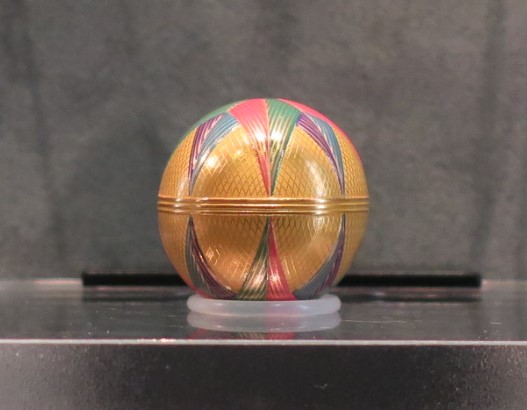 |
| "Silk Ball," Kinuyo Hariya, boxwood and maki-e「手毬」針谷絹代 黄楊&蒔絵 |
Netsuke is a small carved ornament, especially of ivory or wood, worn as part of Japanese traditional dress as a toggle by which an article may be attached to the sash of a kimono (Source: Lexico), and maki-e is a Japanese form of (especially gold or silver) lacquer or lacquerware (Source: Lexico). I've seen many netsuke sculptures, and boxes, combs, and natsume (i.e., green tea powder containers used in tea ceremonies) with maki-e painting, but I've never seen netsuke decorated with such colorful maki-e painting.
'Silk ball,' or temari (meaning 'hand ball') in Japanese, are a traditional craft that originated in China and was introduced to Japan around the 7th century. While this specific temari netsuke is only 3 cm, typical temari are 10–15 cm in diameter. Made with intricate silk embroidery, they are highly valued today as beautiful room decorations.
If you love netsuke, click here to see more than 40 items!
(If you wish to post your comment but don't have a Google account, select "anonymous" from the drop down menu titled "comment as"!)

0 件のコメント:
コメントを投稿