英語の後に日本語が続きます。
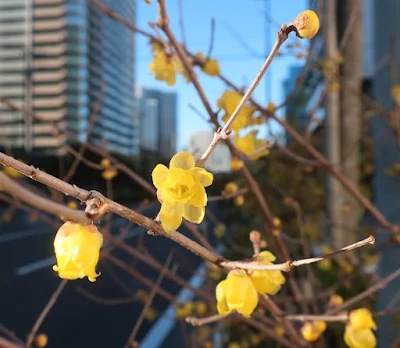
These are wintersweet blossoms. The plant is native to China and came to Japan at the beginning of the Edo period (1603 to 1868). Wintersweet blooms in January and February and of several types, you would mostly see Chimonanthus praecox ‘Luteus’/Chimonanthus praecox f. concolor in Tokyo. The blossoms of this type are yellow in their entirety while another type,
Chimonanthus praecox 'Luteus,' has a purple red inner part. Despite their (i.e., both types) beauty, all parts of the wintersweet are toxic.
 |
| 2025/1/12 |
 |
2025/1/12
|
 |
| 2025/1/12 |
 |
| 2025/1/12 |
 |
| 2025/1/12 |
 |
| 2022/1/10 |
.JPG) |
| 2023/1/22 |
 |
2024/1/15
|
 |
| 2025/5/16 |
 |
| 2025/12/29 |
 |
| 2025/12/29 |
 |
| 2025/1/8 |
 |
| 2024/12/22 |
 |
| 2024/1/23 |
 |
| 2024/1/23 |
 |
| 2024/1/15 |
 |
| 2024/1/2 |
 |
| 2022/1/27 |
 |
| 2022/1/27 |
 |
| 2022/1/27 |
 |
| 2022/1/19 |
 |
| 2021/1/27 |
(If you wish to post your comment but don't have a Google account, select "anonymous" from the drop down menu titled "comment as"!)
ソシンロウバイ(蘇秦蝋梅)です。中国原産で日本には江戸時代初期に来たそうです。東京でよく見かけるのは蘇秦蝋梅ですが
和蝋梅という種類もあり、見かけが全く違います。蘇秦蝋梅は花全体が黄色、
和蝋梅は内側が赤紫です。花期は1月から2月。美しい見かけによらず、蝋梅はその全てが有毒です。
(Google アカウントを持ってない方は、コメント記入後に「Google アカウント」をクリックし、「匿名」か「名前/URL」を選択してからご記入ください!)


.JPG)


0 件のコメント:
コメントを投稿