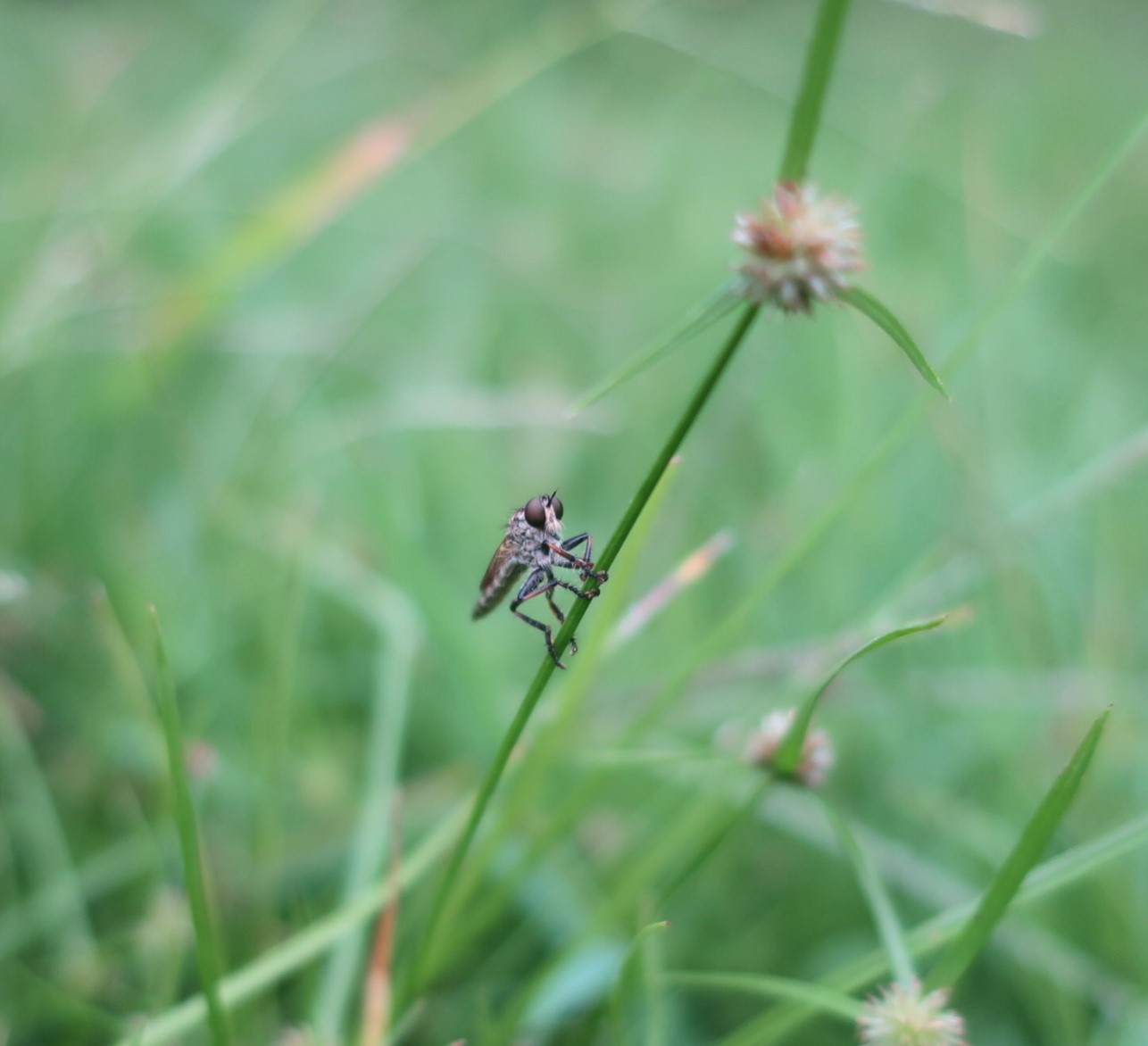
Horsefly アブ

Japanese follows English. 英語の後に日本語が続きます。

I was looking for London plane flowers when I noticed something landing on a grass stem. Then, I found it. So cute, isn't it? Luckily, it stayed where it was for a while, so I was able to take these photos.
 
Horsefly アブ

Pumpkin Beetles Like Gourds, Too! 黒瓜葉虫はヘチマもお好き!

Japanese follows English. 英語の後に日本語が続きます。

At the beginning of this month, I wrote about pumpkin beetles (Aulacophora nigripennis) on flowers of Trichosanthes kirilowii (Chinese cucumber) and today, I found the beetles on sponge gourd flowers. These pumpkin beetles are known to be harmful to gourds and cucumbers, but not that so compared to red pumpkin beetles (i.e., Aulacophora femoralis).

A pumpkin beetle on a sponge gourd flower ヘチマの花の上の黒瓜葉虫


Coprinopsis Lagopus (Hare’s Foot Inkcap)? 粗柄一夜茸(ザラエノヒトヨタケ)?

Japanese follows English. 英語の後に日本語が続きます。

It's less hot but still humid in Japan and that's why I found them. These are hare’s foot inkcap mushrooms (Coprinopsis lagopus) or so I think. Mushrooms usually attract me for their shape but hare’s foot inkcap mushrooms intrigue me with their color, i.e., translucency.

Hare’s foot inkcap 粗柄一夜茸

Coprinopsis lagopus ザラエノヒトヨタケ

Blue Passionflower (Passiflora Caerulea) 時計草(トケイソウ)

Japanese follows English. 英語の後に日本語が続きます。

The plant is supposed to flower in April and May, but it still has several flowers. They're blue passionflowers (Passiflora caerulea). Their Japanese name is "clock plant" after the appearance, which resembles a clock.  

Blue passionflower 時計草

Passiflora caerulea トケイソウ

Japanese Wisteria (Wisteriopsis Japonica) 紫夏藤(ムラサキナツフジ)

Japanese follows English. 英語の後に日本語が続きます。

I noticed that they were not Japanese bush clover (Lespedeza) when about to delete these photos. They're Japanese wisteria (Wisteriopsis japonica) in the Hasedera temple, Nara. It was so hot that day that I was able to take a couple of photos of the flowers. The wisteria produces white flowers, too. 

Japanese wisteria 紫夏藤

Wisteriopsis japonica ムラサキナツフジ

Carpenter Bee (Xylocopa) 熊蜂(クマバチ)

Japanese follows English. 英語の後に日本語が続きます。

This is a carpenter bee (Xylocopa) having breakfast on sponge gourd flowers. I've been seeing the bee for the last couple of months and wanting to photograph them but they move from one flower to another so quickly that they flee before the camera focuses on them, so I decided to take @zaungruen method, i.e., focusing the camera on a flower and waiting for the subject to come and it worked😀!!!  

Carpenter bees are large, i.e., 2 to 3 cm, flying so quickly, so I assumed that they're aggressive but they're relatively gentle. I love the giant bees😄

Carpenter  bee 熊蜂

Carpenter bee クマバチ

Beach Vitex (Vitex Rotundifolia) ハマゴウ(浜拷)

Japanese follows English. 英語の後に日本語が続きます。

It's been two weeks since I last took a morning walk in my neighborhood and in the two weeks, things have changed, such as the beach vitex (Vitex rotundifolia) starting to flower. 

Beach vitex ハマゴウ

Vitex rotundifolia 浜拷

Two Types of Stink Bugs - Green Stink Bug and Yellow-Spotted Stink Bug チャバネアオカメムシ&キマダラカメムシ

Japanese follows English. 英語の後に日本語が続きます。

The stink bug season has come😅! I found these two bugs this morning, i.e., a green stink bug (Plautia crossota) and a yellow-spotted stink bug (Erthesina fullo). The green bug (by a one yen coin) started running when I started to photograph it, which was so adorable!! Ten minutes later, I found the yellow-spotted stink bug on a leaf of the Chinese tallow (Triadica sebifera). I know stink bugs are stink and harmful to some plants, but still, stink bugs, especially the small green one, are so adorable! 

A green stink bug  茶羽根青亀虫


A yellow-spotted stink bug 黄斑亀虫

Sacred Lotus (Nelumbo Nucifera) ハス(蓮)

Japanese follows English. 英語の後に日本語が続きます。

I posted photos of lotus flowers when writing about Saidaiji temple and Hasedera temple, but today's focus is the flower, especially the receptacle and the black and green things in the receptacle, i.e., lotus fruits! The fruits are edible, like nuts, and they go well with beer according to a lotus farmer, but they're not known much in Japan. Lotus flowers are pretty, their roots are delicious and the fruits are funnily cute! I love lotuses!   

Lotus receptacles ハスの花托


Saidaiji Temple and Lotus Flowers 西大寺と蓮の花

Japanese follows English. 英語の後に日本語が続きます。

This is Saidaiji temple and lotus flowers there. The lotus season was almost over, but the temple still had beautiful white and pink flowers despite its sad history.

Saidaiji temple was founded in the eighth century by Empress Shotoku, a daughter of Emperor Shotoku, who founded Todaiji temple. Saidaiji temple, which means a great temple in the west in Japanese, and Todaiji, which means a great temple in the east, were once considered kind of twins and between the two temples stood the Imperial Palace of Heijo (i.e., the then capital) from 710 to 784. But after that, Saidaiji temple started to decline, underwent a series of natural disasters, and ultimately lost its power and influence. Actually, most Japanese must have heard of or been to Todaiji but not Saidaiji. 

As this history suggests, its premises are far smaller than Todaiji's and there were almost none in the temple when I was there. The twin temples made me think about people and their lives 1,300 years ago.  

Saidaiji temple 西大寺

Hasedera Temple and Sacred Lotus Flowers 長谷寺と蓮の花

Japanese follows English. 英語の後に日本語が続きます。

This is Hasedera temple. The temple is in a mountainous area in the Nara prefecture, so to reach the main hall, you need to climb up 399 stairs (1st and 2nd photos), but it's worthwhile. Stunning views are waiting for you (5th photo)! 

The temple is known for various flowers. The lotus season was almost over but it still had several white and pink lotus flowers (Nelumbo nucifera), which made me forget about the heat for a while.

399 stairs from below 階段の下から

399 stairs from above 階段の上から
A lotus flower and stairs in the back 蓮の花と階段

False Parasol (Chlorophyllum Molybdites) オオシロカラカサタケ(大白唐傘茸)

英語の後に日本語が続きます。 The false parasol mushroom (Chlorophyllum molybdites) is native to temperate and subtropical regions but can now be found acr...