Photinia x Fraseri (Red Tip Photinia) 紅要黐(ベニカナメモチ)

Japanese follows English. 英語の後に日本語が続きます。

They're the flowers of Photinia x fraseri or more commonly known as red tip photinia or Red Robin. I enjoyed its bright red young leaves in early April but didn't expect to be able to enjoy such tiny flowers, too. The red color of the leaves has faded a little (click here to see the leaves before changing the color!), which made me feel a bit sad... 

If you’re interested in why the young leaves and buds of some plants are bright red, read this post!

Red tip photinia ベニカナメモチ

Photinia x fraseri 紅要黐

Polygonatum Odoratum (Solomon's Seal) 甘野老(アマドコロ)

Japanese follows English. 英語の後に日本語が続きます。

They're Polygonatum odoratum or more commonly Solomon's seal. The bell shaped white flowers with a green tinge look so innocent. The young shoots are eaten in Japan as a spring delicacy although I've never tried.  

Polygonatum odoratum 甘野老

Solomon's seal アマドコロ

Apple Blossoms リンゴの花

英語の後に日本語が続きます。

They're Fuji apple blossoms. The pink-tinged white flowers are so beautiful. I used to think of apples only as something to eat, but these blossoms have completely changed my perspective.

Apple flowers リンゴの花

Jasminum Polyanthum (Pink Jasmine) 羽衣素馨(ハゴロモジャスミン)

Japanese follows English. 英語の後に日本語が続きます。

They're Jasminum polyanthum or more commonly known as pink jasmine. The buds were first deep red, changing to pink, then opening to beautiful pure white flowers with a baby spider on it!  

Jasminum polyanthum 羽衣素馨

Pink jasmine ハゴロモジャスミン

Amelanchier Canadensis (Juneberry) 亜米利加采振木(ジューンベリー)

Japanese follows English. 英語の後に日本語が続きます。

This is Amelanchier canadensis or more commonly known as juneberry. I didn't notice the flowers until recently because it was still dark when I was walking by the tree, but now the sun is rising earlier, revealing things I couldn't see then. There must be many other things that are in front of me but I can't see. The pretty tiny white flowers against the background of cherry blossoms are beautiful. 

 Amelanchier canadensis ジューンベリー

With the background of cherry blossoms 桜を背景に

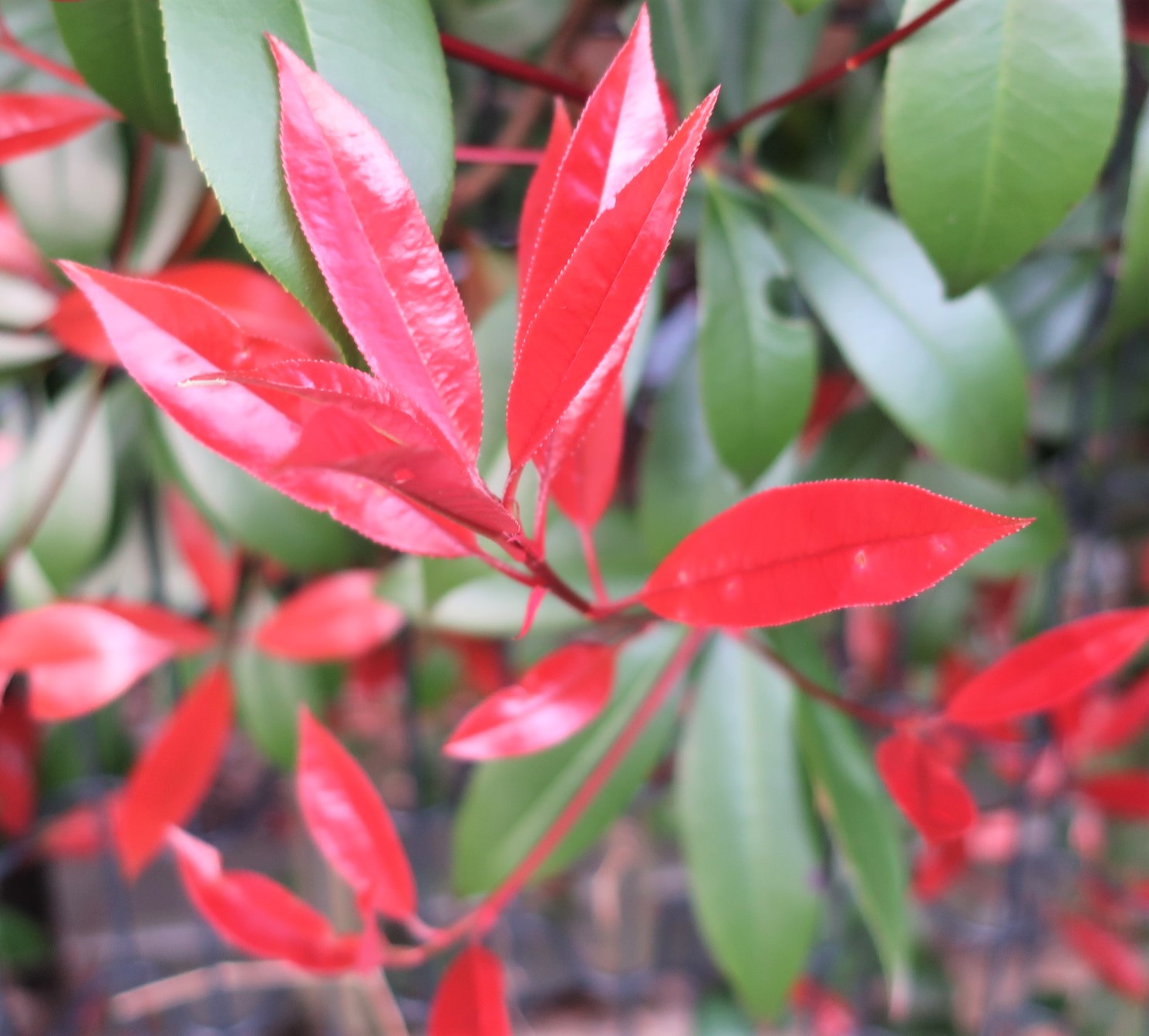
Photinia x Fraseri (Red Tip Photinia) 紅要黐(ベニカナメモチ)

Japanese follows English. 英語の後に日本語が続きます。

They're the young leaves of Photinia x fraseri or more commonly known as red tip photinia or Red Robin. I first ignored the leaves because they were too bloody red (scary!) but became unable to do so because they're too red to ignore!

Young leaves and buds are red for a reason. According to Professor Kunijiro Yoshitama at Kumamoto University, the fresh shoots and young leaves of some plants are red because of the following reasons:
  1. The temperature of red leaves is higher than that of green leaves.
  2. The red pigment in leaves (i.e., anthocyanin) is antibacterial and prevents larvae.
  3. The red pigment in leaves (i.e., anthocyanin) promotes the development of chloroplast while protecting the plastid from ultraviolet rays.
Photinia x Fraseri 紅要黐

Cherry Blossoms Onto A Tree Trunk 胴吹き桜

英語の後に日本語が続きます。

Cherry blossoms usually bloom on the branches, but sometimes they don't. Instead, they cling to the tree trunk. This often occurs in older trees, and there is a specific reason for it.
Because older trees have less energy, they try to produce leaves and flowers on the trunk—the main body of the tree—because it requires less effort. The irony is that cherry blossoms bloom before the leaves do, even though producing flowers requires more energy. Cherry trees are both wise and silly, aren't they?

If you're interested in learning about cherry blossoms, check out my other post, 'List of Cherry Blossoms'!

Yoshino cherry blossoms on the tree trunk 胴吹き桜

Vinca Minor (Lesser Periwinkle) 姫蔓日日草(ヒメツルニチニチソウ)

英語の後に日本語が続きます。

This is Vinca minor, more commonly known as lesser periwinkle or dwarf periwinkle. I have written about Vinca major (or greater periwinkle) before, but this was my first time seeing the two types blooming side by side (2nd photo). The deep purple (Vinca minor) and pale purple (Vinca major) flowers among the green leaves were so beautiful.
  
Vinca minor 姫蔓日日草

Homemade Candied Pomelo Peels パール柑のピール

Japanese follows English. 英語の後に日本語が続きます。

They're candied pomelo peels. I made them! Covid-19 has changed my life in several ways. I've started to take a morning walk and take photos of plants I find during the walk. I've also started to cook something I didn't before because of a long time to cook, like jam or peels. 

The peels are brownish orange because I always use brown sugar to sweeten food. I also eat brown rice and brown bread much more than white ones. Some say that brown food is healthier than white food, but that's not the reason I prefer brown food. I just like them. The thing is that it's difficult to find good rye bread at a reasonable price in Japan. I love a slice of rye bread with such peels and a black coffee!   

Candied pomelo peels パール柑のピール

Camellia Japonica (Japanese Camellia) 椿(ツバキ)

Japanese follows English. 英語の後に日本語が続きます。

This is Camellia japonica or Japanese camellia. I thought that Japanese camellia produces flowers in winter, but it actually flowers from February to April.

One of the flowers has a lot of pollen on the petals (3rd photo). Japanese camellia is not entomophilous, i.e., pollinated by insects, but ornithophilous, i.e., pollinated by birds, and mostly by warbling white eyes.
  
Camellia Japonica 椿

Japanese camellia ツバキ

Bergenia (Elephant-Eared Saxifrage) ヒマラヤ雪の下(ヒマラヤユキノシタ)

Japanese follows English. 英語の後に日本語が続きます。

This is Bergenia or more commonly known as elephant-eared saxifrage or elephant's ears. Clusters of the pink flowers among literally elephant ear-shaped leaves were gracefully gorgeous.   

Bergenia is evergreen, and the leaves turn red in autumn according to the internet. I want to see them in person.   

Bergenia ヒマラヤ雪の下

Autumn Leaves 紅葉

英語の後に日本語が続きます。 The best season for autumn leaves in Tokyo is from late November to early December. Red and yellow leaves are beautiful, but ...