Glaze and Firing Determines the Color 釉薬と焼成

英語の後に日本語が続きます。

These dishes are similar in size, shape, and origin, but their colors vary due to the distinct glazes and firing processes used:
  • White (Picture 1): White glaze + reduction firing
  • Brown (Picture 2): Celadon glaze + oxidation firing
  • Blue (Picture 3): Celadon glaze + reduction firing

Gourd-shaped Jingdezhen Wucai Vase 五彩金襴手瓢形大瓶

英語の後に日本語が続きます。

Standing over 60 cm tall, this gourd-shaped porcelain vase is a piece of Jingdezhen wucai (five-color) overglaze enamel and gold pottery. Created in 16th-century Ming dynasty China, it is now housed at the Tokyo National Museum.

Gourd-shaped Jingdezhen wucai vase in overglaze enamel and gold
16th century, Ming dynasty 五彩金襴手瓢形大瓶

Figure of Juro (God of Longevity) 色絵寿老置物

英語の後に日本語が続きます。

Housed at the Tokyo National Museum, this is a mid-19th-century pottery figure of Jurō—the god of longevity and one of the Seven Lucky Gods—made by the prominent Kyoto ware potter Ninnami Dōhachi (1783–1855), who is well-known for his tea ceremony wares.

To learn more about the Japanese Seven Lucky Gods, check out the table below the photo!

Juro or god of longevity 寿老神

Cambodian Statue With Thumb Up イエーイ!な仏像

英語の後に日本語が続きます。

"I have a lot of money. Money follows me like chicks do! I'm cool and have everything! YAY!!" ...said this 10cm-tall statue. Or was it just my hallucination?

This statue is the "Standing Uma" from Cambodia, housed at the Tokyo National Museum. Uma is a Hindu goddess and Ganesh's mother. Oh, so it is her! I definitely need to rewrite that first paragraph!

I didn't mean to be disrespectful to Ganesh or Uma; I was just amazed by how different this cute and beautiful goddess is from Japanese statues. Most Japanese statues just stand or sit with an archaic smile, lacking any lively facial expressions or body language. Her cute unibrow and half-raised arms made me smile and feel happy!

Standing Uma

Goryeo Celadon and Colors of Japan 高麗青磁は青?緑?

英語の後に日本語が続きます。

Housed at the Tokyo National Museum, these Goryeo dynasty (918–1392) wares grew in production from the mid-10th century and reached their artistic peak in the 12th century. Their luminous jade-green glaze, paired with delicate carved and inlaid decoration, is breathtakingly elegant.

Ewer with lotus-shaped lid 青磁蓮華蓋水注

Jingdezhen Dish 黄釉蓮花形皿

英語の後に日本語が続きます。

Housed at the Tokyo National Museum, this Jingdezhen dish was crafted with a yellow glaze during China's Qing dynasty. Its bright yellow is so beautiful and powerful that it always reminds me of the yellow tulips in the second photo. Such vibrant tulips always make me feel happier, and they may have also inspired potters during the Ming and Qing dynasties to recreate such a lively yellow in their ceramics.

Jingdezhen dish in shape of lotus, Qing dynasty, Yongzheng era (1723-1735) 
黄釉蓮花形皿

Chakrasamvara in Union With Consort or Yab-Yum チャクラサンヴァラ父母仏立像

英語の後に日本語が続きます。

Nepalese and Tibetan deities are remarkably open to love and less ascetic, aren't they? A prime example is Chakrasamvara—a wrathful deity—and his consort. Their unabashed expression of love is often surprising to Japanese people.

Chakrasamvara with consort, Nepal or Tibet チャクラサンヴァラ父母仏立像

Interestingly, Japan itself used to be quite open toward love and sex, as seen in shunga, or erotic ukiyo-e. This cultural attitude shifted during the Meiji period with the introduction of Western ideals of Christian purity and chastity.

Japan also used to be less discriminatory against women. According to Michiko Nagai, a Japanese historical fiction author, the social status of Japanese women dropped during the Edo period (1603–1868) due to Ieyasu Tokugawa’s discriminatory attitudes. As the founder of the Tokugawa shogunate, Ieyasu ushered in the Edo period, which spanned over 260 years. The resulting decline in women's social status is a legacy of that era that remains unresolved today.

Yab-Yum with full of love

Posted on 2/6/2020
Revised on 10/30/2026

(If you wish to post your comment but don't have a Google account, select "anonymous" from the drop down menu titled "comment as"!)

東京国立博物館所蔵のチャクラサンヴァラ父母仏立像です。「大らかだな」としばし見入ってしまいました。日本も昔はこんな感じだったのに、明治維新で随分変わったようです。ちなみに女性の地位がぐんと下がったのは江戸時代、徳川家康のせいだとのこと。永井路子氏の「にっぽん亭主五十人史」にありました。「昔」の日本ってよく聞きますが、昔もいろいろあります。平安時代までの昔、戦国時代の昔、江戸時代の昔、明治時代~戦前の昔では、同じ「昔」と言ってもその実態は全く異なるようです。

ちなみに実態、実質(substance)という言葉は会計税務でもよく使われます。「substance over form(形式より実態が優先する)」という用語があり、「取引がたとえ形式的には法令順守していても、実態、実質が満たしていなければ順守しているとはみなされない」という意味です。覚えておくと便利です。

初稿 2/6/2020
改訂 10/30/2026

(Google アカウントを持ってない方は、コメント記入後に「Google アカウント」をクリックし、「匿名」か「名前/URL」を選択してからご記入ください!)

Thousand-Armed Bodhisattva Kannon 千手観音菩薩坐像

英語の後に日本語が続きます。

I know it’s a bit disrespectful, but the statue's arms look like Hattifatteners to me. This is a 14th-century thousand-armed Kannon bodhisattva housed at the Tokyo National Museum. It has 42 arms in total—including the two main ones—meant to help people in need.

Thousand-armed bodhisattva kannon, 14th century 千手観音菩薩坐像 14世紀

Celadon Lid Rest for Tea Ceremony 青磁三閑人蓋置

英語の後に日本語が続きます。

This 17th-century, 3cm-tall celadon kettle lid rest is shaped like three figures. It was made during China's Ming dynasty and is now housed at the Tokyo National Museum. Kettle lid rests of this type—featuring three children holding hands—were a favorite of the tea master Sen no Rikyu (1522–1591).

What does it look like to you? 何に見える?

Incense Burner - Lions Smile in Asia 織部獅子鈕香炉 - 獅子はアジアで笑う

英語の後に日本語が続きます。

This is an Oribe-style Mino ware incense burner with a lion-shaped knob, housed at the Tokyo National Museum. Its green glaze is beautiful, isn't it? Created in 1612, Mino ware refers to pottery produced in Mino Province (present-day Gifu Prefecture), while the Oribe style is a design tradition that emerged in the late 16th century under the guidance of Furuta Oribe. 

Incense burner with lion-shaped knob, Oribe-style Mino ware, 1612 
織部獅子鈕香炉 1612年

The Temptation of St. Anthony by David Teniers the Younger 聖アントニウスの誘惑

英語の後に日本語が続きます。

Aaaaaaaaaaaahhhhhhhhhhhhhhh!!!! 

Can you hear it? I just heard it and couldn't help but chuckle. This poor little frog being poked with a stick—while flying on something like a fish or an alligator with both arms raised—was just so cute, wasn't it?
 
Poor little frog

Beach Vitex (Vitex Rotundifolia) ハマゴウ(浜拷)

英語の後に日本語が続きます。

Native to seashores throughout the Pacific, the beach vitex (Vitex rotundifolia) can be found across Japan, producing pale purple flowers from July to September. I didn't know about this plant, but it has been appreciated in Japan since the Heian period (794–1185): its dried fruits were used in pillows to improve sleep and in traditional medicine, while its leaves and stems were burned as an incense to repel mosquitoes. And surprisingly, it's now used to flavor craft gin made in Hiroshima! I want to taste the gin!

8/19/2023

Foxglove (Digitalis Purpurea) ジギタリス

日本語が続きます。

Native to Europe, Western Asia, and northwestern Africa, foxgloves (Digitalis purpurea) are believed to have arrived in Japan in 1879. 

When I first saw the flowers, I hadn't heard of the term 'foxglove,' but I had read about 'digitalis' many times as a poison in Agatha Christie's novels. They're beautiful, yet deadly—a bit like some women.

5/18/2019

Chocolate Vine (Akebia Quinata) アケビ(木通)

英語の後に日本語が続きます。

Native to East Asia, chocolate vines (Akebia quinata) can be found across Japan. They bear pale purple flowers from April to May, followed by chocolate-scented fruits from September to October. Female flowers outnumber the males and are slightly larger.

3/30/2021  A larger female flowers (pale purple) and smaller male flowers (white)

Netsuke - Dog Days 根付 - 猛暑

英語の後に日本語が続きます。

This is a netsuke titled 'Dog Days,' crafted from ivory by Gaho Goto, a Japanese netsuke artist. The bulldog with sweat dripping down its face is so funny. It's housed at the Tokyo National Museum.

"Dog Days" by Gaho Goto 「猛暑」後藤雅峯作

Kawaii Two-Legged Yokai Goblin Netsuke Sculpture 妖怪二本足

英語の後に日本語が続きます。

This 5cm netsuke is titled 'Two-legged yokai (goblin)' and is in the collection of the Tokyo National Museum. It was carved out of boxwood by Yoji Yamada. It's so cute! 

Interestingly, his name is pronounced the same as the famous Japanese film director Yoji Yamada, even though they use different kanji (Chinese characters). He used to carve these while working as a regular company employee. 

Two-legged yokai (goblin) carved by Yoji Yamada from boxwood
「妖怪二本足」山田洋治作

Netsuke 'Watermelon' スイカ

英語の後に日本語が続きます。

This 3cm tall netsuke is titled 'Watermelon' and housed at the Tokyo National Museum. It was crafted with maki-e lacquer painting by Kinuyo Hariya, a Japanese netsuke and maki-e artist. 
 
8/13/2020

Firethorn Tree (Pyracantha) ピラカンサ(常盤山査子)

英語の後に日本語が続きます。

Native to an area extending from Southwest Europe east to Southeast Asia, the firethorn, or pyracantha, can be found across Japan. It produces white flowers from May to June and begins bearing berries in October, which turn red, orange, and yellow and last through February.

Firethorn trees in Japan are usually 1 to 2 meters tall, but they can reach up to 5 meters. I once saw a gigantic one (scroll down), but it was removed due to redevelopment in the surrounding area—which is sad, but happens frequently in Central Tokyo.

2021/11/23

Zao Gongen (Kung Fu Buddha) 押出蔵王権現像

英語の後に日本語が続きます。

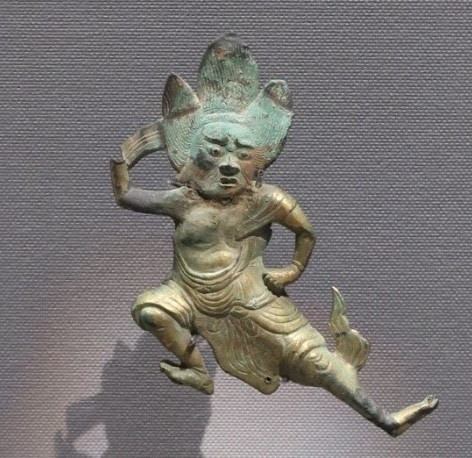
This 15-cm tall artifact is a repoussé image of the deity Zao Gongen, housed at the Tokyo National Museum. Crafted from gilt bronze during the 10th to 12th century, it was discovered at the peak of Mt. Ōmine in Nara Prefecture.

Repousse image of Deity Zao Gongen or kung fu Buddha
 押出蔵王権現像 又の名をカンフー仏陀(笑)

Inside and Outside Tokyo National Museum 東京国立博物館の中と外

英語の後に日本語が続きます。

The Tokyo National Museum was established in 1872. I sometimes visit it, especially when I need to recharge by surrounding myself with beautiful art.

Its exterior is amazing, but that's not all. The interior of each building is just as impressive. Take a look at one of the stained glass windows in the Honkan main building below!

Across the street is Ueno Park, where you'll find a fountain, a peony garden, a zoo, a Starbucks, and, if you're lucky, plenty of food stands! This area is definitely worth spending some time in.

Hyokeikan building during night 夜の表慶館

Rabbit Shaped White Jade Container 白玉兎合子

英語の後に日本語が続きます。

This is a rabbit-shaped container housed at the Tokyo National Museum. It was carved from white jade during the Qing dynasty (18th–19th century). It really looks like a rabbit running through a field, doesn't it? The rabbit represents longevity in China.

China has a long history of crafting fine objects from jade and other gemstones using the qiaose technique, where artisans carve the stone to cleverly incorporate its natural color variations and hues.

Container in shape of rabbit, 18th to 19th century, Qing dynasty 白玉兎合子 清

Waterfowl Shaped Box 白玉水禽形合子

英語の後に日本語が続きます。

This is a white jade box in the shape of a waterfowl from the Qing dynasty, located at the Tokyo National Museum.

In China, male and female waterfowl represent a loving couple, while chicks and lotus flowers symbolize family prosperity. On top of that, the box itself represents love, since 'lotus' sounds like 'love.' While the hidden meaning might be difficult to decipher, don't worry—you can still enjoy this beautiful sculpture without knowing it!

China has a long history of crafting fine objects from jade and other gemstones while maximizing their original colors, a technique known in Chinese art as qiaose.

Box in shape of waterfowl, 19th century, Qing dynasty 白玉水禽形合子 清時代

Jadeite Carp 碧玉鯉

英語の後に日本語が続きます。

This carp-shaped vase was carved from a single piece of dark green and white jade in the 19th century under the Qing dynasty. Carp are a symbol of promotion and success in China. The piece is currently housed at the Tokyo National Museum. 

The piece was crafted in the 19th century under the Qing dynasty using the qiaose technique, where the artisan carves the stone to maximize its natural color variations and hues. 

Flower vase in shape of carp 碧白玉双鯉花器

Agate Goldfish 瑪瑙金魚

英語の後に日本語が続きます。

This 19th-century Qing dynasty sculpture features 15 agate goldfish strung together. In China, the goldfish is a traditional symbol of wealth. With their wide, open mouths, every single fish looks incredibly cute!

Currently housed at the Tokyo National Museum, the piece was crafted using the qiaose technique, where the artisan carves the stone to maximize its natural red and white colors. The National Palace Museum in Taipei also houses a famous example of this style—the iconic Jadeite Cabbage.

They are opening their mouths! 口パクパク!

Jingdezhen Ewers Decorated in Overglaze Enamel and Gold 五彩金襴手水注と三彩金襴手水注 

英語の後に日本語が続きます。

These are Jingdezhen wares with overglaze enamel decoration, housed at the Tokyo National Museum. They were made in the 16th century during the Ming dynasty. The first is a wucai (five-color) painted porcelain, and the second is a sancai (three-color) piece.

They're supposed to be used for holding or pouring water, but both are so gorgeous that I wouldn't even dare drink out of them!

Jingdezhen ware wucai ewer in overglaze enamel and gold
五彩金襴手水注

White Jade Sculptures with Hidden Messages 白玉文鎮に隠されたメッセージ

英語の後に日本語が続きます。

These are Chinese sculptures carved from white jade, housed at the Tokyo National Museum. They're all beautiful, but what interested me was not their beauty, but their hidden messages.

Incense burner in shape of cooking vessel, 18th to 19th century, Qing dynasty
白玉牡丹獅子飾鼎形香炉

Wine Vessel Carved from Ivory 象牙彫卣

英語の後に日本語が続きます。

The first photo shows the top of an ivory wine container housed at the Tokyo National Museum. Made during the 18th century during the Qing dynasty, the lion on top teaches us exactly how to smile when told to 'Say cheese.'

Say cheese!

Indigo Blue Tomb Figure Rabbit 藍釉兎

英語の後に日本語が続きます。

This 10cm-tall Tang sancai tomb figure is housed at the Tokyo National Museum. I first thought it was a mouse, but it was a rabbit. Either way, it's so chubby and cute, isn't it?

Rabbit, 8th century, Tang dynasty 藍釉兎

Famille Rose Vase with Openwork and Arabesque Design 粉彩透彫唐草文双耳瓶

英語の後に日本語が続きます。

Housed at the Tokyo National Museum is a famille rose enamel porcelain. It is about 50 cm tall and double-walled, featuring an openwork frame on the outside and an underglaze blue vase on the inside.

Famille rose enameled vase with two lugs
with arabesque design, Qing dynasty, Qianlong era
(1763-1795) 粉彩透彫唐草双耳瓶

Famille Rose Vase 粉彩牡丹文大瓶

英語の後に日本語が続きます。

Housed at the Tokyo National Museum, this 50 cm-tall famille-rose vase features peony designs. Created during the Yongzheng period (1723–1735) of the Qing dynasty, its overglaze enamel technique allowed for fine color gradations and a more three-dimensional effect. 

The peony motifs are so exquisite that I compared them to real peonies at the peony garden within the Ueno Park, and the artwork looked remarkably lifelike.

Large vase with peony design in famille rose enamel,
Yongezhen period, Qing dynasty
粉彩牡丹文大瓶

Qing Dynasty Glasses 清朝の乾隆ガラス

英語の後に日本語が続きます。

Housed at the Tokyo National Museum, these glass products were all made in China during the Qing dynasty. They are so colorful that I first thought they were crafted in the Middle East. These vibrant pieces are known as Qianlong glass, named after the 6th Qing emperor.

Jar: Opaque red glass on yellow glass

Pottery Pillow 陶製枕(三彩印花唐草文枕)

英語の後に日本語が続きます。

This ceramic pillow is glazed in three colors and features a stamped arabesque design. It was made in China in the 8th century. Still, I can't help thinking: who could actually sleep on a pillow like that? 😆 This is one of 496 pieces in the collection donated to the Tokyo National Museum by the late Japanese art dealer Matsushige Hirota (1897–1973).

A Scepter Set 時計付き笏(如意型時計)

英語の後に日本語が続きます。

If you're exhausted and need a pick-me-up, you should go to the Toyokan (Asian Gallery) of the Tokyo National Museum to see this! Housed inside, it’s a 19th-century Chinese scepter set with a European watch, colored glass, pearls, and enamel paintings. Qing dynasty emperors totally adored imported timepieces. I stood in front of this brilliant, colorful scepter and just stared at it for a few minutes.

Grapes 紫水晶葡萄

英語の後に日本語が続きます。

Housed at the Tokyo National Museum, Grapes is a 19th-century amethyst sculpture crafted in the qiaose style—a technique that uses the stone's natural color variations to bring out its purple hues.

Incense Burner 翡翠香炉

英語の後に日本語が続きます。

Carved from jade in 19th-century China during the Qing dynasty and housed at the Tokyo National Museum, this incense burner uses the qiaose technique—a style of carving that utilizes the stone's natural color variations to highlight the green of the jade.

Agate Pomegranate 瑪瑙石榴

英語の後に日本語が続きます。

It seems so fresh and so real, doesn't it? I've eaten pomegranates only a few times and don't remember what they tasted like, but when I set eyes on this red stone craft, I wanted to take a bite of it!

This piece, titled 'Pomegranate,' is a 19th-century Chinese sculpture housed in the Toyo Kan (Asian Gallery) of the Tokyo National Museum. I originally thought it was ceramic, but it is actually made of agate with rubies inlaid as the seeds. 

Money Tree 揺銭樹

英語の後に日本語が続きます。

This 2-meter-tall bronze tree, decorated with more than 400 bronze coins, is known as the 'Money Tree,' and is housed at the Tokyo National Museum. Despite the name, the tree has not only financial significance, but also religious significance.

Many money trees were crafted during the first and second centuries under China's Han dynasty, placed inside tombs as sacred burial art to guide the deceased's soul and ensure infinite wealth in the paradise of Xiwangmu (the Queen Mother of the West).

Crown Decorated with Cicada Design 蟬文冠飾

英語の後に日本語が続きます。

This 5 cm-wide and 5 cm-tall gilt-bronze crown is housed at the Tokyo National Museum. Its color is striking, and its cicada design—typical of ancient bronze works—is exquisite.

Interestingly, in ancient China, the cicada was deeply revered as a symbol of rebirth, immortality, moral purity, and high nobility, whereas in Japan, it was perceived primarily as a poetic symbol of impermanence (mujō), transience, melancholy, and the passing of summer.

Netsuke 'Nue' (Legendary Monster) 「鵺」😱

英語の後に日本語が続きます。

What do you think this netsuke depicts? This is a boxwood netsuke titled "Nue," carved by Meishu Kawahara. 

Nue originally referred to—and still means—the scaly thrush, a bird about 30 cm long known for the male's loud, far-carrying mechanical whistle. These days, however, the term is better known as a legendary monster with the head of a monkey, the legs of a tiger, the body of a dog, and the tail of a snake, which is said to cry like a nue.

Skunkvine (Paederia Foetida) 屁糞葛(ヘクソカズラ)

英語の後に日本語が続きます。

Skunkvine (Paederia foetida) is native to Asia and can be found across Japan. Because it is notoriously smelly, its Japanese name is hekusokazura, which translates to 'fart-dung vine.' The plant is so resilient that an imperial court official during the Nara period (710–794) wrote a waka poem comparing his own tenacity to the plant. The poem appears in the Manyōshū, the oldest extant collection of Japanese waka poetry.

Despite its terrible name and smell, the flower's glossy red center always reminds me of jam thumbprint cookies.

2026/8/14

Netsuke 'Frog and Ants' 「蛙と蟻」

英語の後に日本語が続きます。

In Prince Takamado's netsuke collection at the Tokyo National Museum is this 10cm-tall netsuke, titled Frog and Ants. The frog desperately but cutely escaping from the ants first caught my eye, but what surprised me most was that the carver is the American David Carlin.

Netsuke 'Beginning and End' 「阿吽」

英語の後に日本語が続きます。

In the Prince Takamado Collection at the Tokyo National Museum, this 10 cm-long netsuke titled Beginning and End by Kihō Takagi features a salmon roe sushi on its left half—symbolizing life's beginning—and a spent, dying salmon on the right, representing its end.

Netsuke 'Halloween' 「ハロウィン」

英語の後に日本語が続きます。

In Prince Takamado's netsuke collection at the Tokyo National Museum, there is a 3-cm-tall piece titled 'Halloween,' carved from a macadamia nut and amber by Toun Shishido. It made me think about Japanese religion. Do they follow Buddhism, Shinto, Christianity, Islam, or something else—or are they mostly atheist?

Netsuke titled “Halloween,” carved from macadamia nut and amber 「ハロウィン」宍戸濤雲作

Stink Bug (Plinachtus Bicoloripes) キバラヘリカメムシ(黄腹縁亀虫)

英語の後に日本語が続きます。

It's supposed to be stinky, but it’s beautiful, isn't it? This is Plinachtus bicoloripes, a species of stink bug native to Asia. You can often find them across Japan on the leaves and fruits of the staff-vine family. This one is hanging out on the fruits of a Hamilton's spindletree (Euonymus hamiltonianus). Fun fact: Plinachtus bicoloripes is actually known to be 'stink-free'—apparently, it smells like green apples or fresh grass! Maybe I should sniff one someday! 😆

2026/10/21

Joro Spider (Trichonephila Clavata) ジョロウグモ(女郎蜘蛛)

英語の後に日本語が続きます。

Joro spiders (Trichonephila clavata) are native to Asia and can be found across Japan. As is often the case with spiders, the females are much larger. While a female's body length ranges from 17mm to 30mm, a male's is only 6mm to 10mm. This means the two spiders in the post are both female.

Fennel ウイキョウ

英語の後に日本語が続きます。

I've eaten and used this herbal plant many times, but I never realized it had such beautiful flowers. Fennel (Foeniculum vulgare) is native to the Mediterranean region and southern Europe, and it arrived in Japan during the Heian period (794 to 1185) through China.

Elizabeth Better Watch Her Back.... ご注意あれ、エリザベス!(仮定法現在の練習も兼ねてます)

英語の後に日本語が続きます。

'If you had a gun and two bullets and saw a king cobra and Elizabeth right in front of you, who or which would you shoot first?'

Bamboo-Leaf Oak (Quercus Myrsinifolia) シラカシ(白樫)

英語の後に日本語が続きます。

The bamboo-leaf oak (Quercus myrsinifolia) is native to eastern Asia and can be found across Japan. The tree produces flowers from April to May, followed by its fruits: acorns. What I find most enjoyable is observing their growth. They are tiny and pale green at first, getting chubbier while turning matcha green, and then brown toward autumn. These baby acorns still have styles, which are part of the pistils.

2026/10/16

All Roads Lead to Traffic Safety: Why the Hook Turn Matters in Japan 二段階右折は大切

英語の後に日本語が続きます。

The traffic rules in Japan can be quite complicated for cyclists, especially the hook turn for those coming from countries without the rule. To understand key rules for cyclists in Japan and why the hook turn matters, I went to a local police box (Koban). Two officers on duty gave me the following information:

Garden Mum (Chrysanthemum x Morifolium) キク(菊)

英語の後に日本語が続きます。

Here are some red and yellow garden mums (Chrysanthemum × morifolium) with a green plant bug (Apolygus lucorum) on one of them (see the second photo).

Chrysanthemums are special in Japan. The Imperial Seal of Japan is called the Chrysanthemum Seal and is used by the Emperor and the Imperial Family. But for me, the flowers are special in a different way—they always remind me of The Inugami Clan, a murder mystery book by Seishi Yokomizo (1902–1981). Yokomizo is one of Japan's most famous crime authors and the creator of the private detective character Kosuke Kindaichi.

Double-Flowered Camellia Sasanqua 八重咲の白山茶花

英語の後に日本語が続きます。

The Camellia sasanqua is native to Japan and can be found across the country. It blooms from October to December, unlike the Camellia japonica, which flowers from February to April. Its colors vary from white to pink and red, and its petals range from single to double forms. The blooms in this post are double-flowered, white with pink edges, and can easily be spotted across Tokyo. Before opening, they look just like wagashi (traditional Japanese sweets).

2026/10/15

Angled Sunbeam (Curetis Acuta) ウラギンシジミ(裏銀小灰蝶)

英語の後に日本語が続きます。

Some butterflies look completely different when their wings are open versus closed. One example is the angled sunbeam (Curetis acuta), a butterfly found in eastern Asia, including Japan. Because the male has an orange center on the upperside of its wings while the female has a pale blue center, it is easy to tell them apart when their wings are open.

The butterfly's Japanese name is 'ura-gin-shijimi,' which translates to 'gossamer-winged butterfly with a silver underside.'
   
2026/8/16

Common Bluebottle (Graphium Sarpedon) アオスジアゲハ(青条揚羽)

英語の後に日本語が続きます。

Their blue always cheers me up. The common bluebottle (Graphium sarpedon) is native to East and Southeast Asia, as well as Australia, and can be found across Japan generally from May to October. Because they are so restless, if you find one, never chase it; instead, sit still and wait for it to land in front of you.

2024/7/2

Canadian Goldenrod (Solidago Canadensis) セイタカアワダチソウ(背高泡立草)

英語の後に日本語が続きます。

Native to North America, the Canadian goldenrod (Solidago canadensis) arrived in Japan around 1880 and can now be found across the country. Its bright yellow flowers stand out in autumn as the landscape begins to lose its color in October. Some Japanese people say that the plant is the cause of autumn hay fever, but they're mistaken. The true culprit is the common ragweed (Ambrosia artemisiifolia). In winter, the Canadian goldenrod prepares for winter by producing fluffy pappi (scroll down).

2026/10/11

Common Straight Swift (Parnara Guttata) イチモンジセセリ(一文字挵)

英語の後に日本語が続きます。

The common straight swift (Parnara guttata) is found across Japan, where it is a much-loved insect. While moths usually open their wings when resting and most butterflies keep theirs closed, the common straight swift sometimes rests with its wings open to absorb warmth from the sun. This behavior allowed me to see that its back is green (scroll down). You can also scroll down to see an ant carrying a dead common straight swift.

The butterfly's Japanese name is "ichimonji seseri," which translates to "straight-line skipper" due to the white spots aligned on its wings. In contrast, the small branded swift (Pelopidas mathias), which features white spots arranged in a circle, is called "chabane seseri" in Japanese, translating to "brown-wing skipper."

Personally, I really love common straight swifts because of their cute, squirrel-like eyes.

2026/10/4

Winter Cherry (Cerasus x Parvifolia/Cerasus Subhirtella) フユザクラ(冬桜)

英語の後に日本語が続きます。

Fragile and lovely, the winter cherry (Cerasus x parvifolia 'Fuyu-zakura') is a crossbreed of Cerasus incisa and Cerasus speciosa. This tree differs from most other cherry trees in its blooming schedule. It blossoms twice a year—once in the winter (from October to December) and again in the spring—which is why it is called the 'winter cherry' in Japan.

It is also known as 'koba zakura,' which translates to 'small leaf cherry' due to its relatively small leaves. While these winter cherry blossoms are less vibrant, they last longer than other cherry blossoms, which generally fall within two weeks.

Some people see a winter cherry tree and say it's silly for blooming out of season. But whenever I hear that, I always think to myself, 'No, you're the silly one!😝 

If you love sakura, check out my other post, 'List of Cherry Blossoms'!

2021/11/25

Hamilton's Spindletree (Euonymus Hamiltonianus) マユミ(檀)

英語の後に日本語が続きます。

Some plants bring you happiness throughout the year and Hamilton's spindletree (Euonymus hamiltonianus) is one of them. Native to East Asia, the plant can be found across Japan. It produces tiny, cream flowers from May to June and fruits in autumn. The fruits are four-lobed and green at first, later turning pale pink and cracking open to show seeds with red arils.

One great thing about photographing plants is that it makes people more talkative. When I was photographing Hamilton's spindle tree fruit this past September, two women approached me to ask what they were. I told them they were the fruits of a Hamilton's spindle tree, but the women insisted they were buds about to flower, not fruit. It was fun chatting with strangers about the little things.

2026/4/24

2025/5/9

Sawtooth Oak (Quercus Acutissima) クヌギ(櫟)

英語の後に日本語が続きます。

The sawtooth oak (Quercus acutissima) is native to Northeast Asia and can be found all across Japan. While the tree is famous for its acorns, its unique cupules and flowers—which bloom from April to May—are also beautiful. The hanging flowers have always reminded me of a 'noren', the traditional fabric curtains hung at the entrance of Japanese izakaya restaurants 😆.

Toad Lily (Tricyrtis Formosana) タイワンホトトギス(台湾杜鵑草)

英語の後に日本語が続きます。

They are toad lilies (Tricyrtis formosana). While this plant is typically said to flower from August to September, I’ve come to believe that toad lilies actually bloom year-round. I have seen them in May, as well as in December and September.

The plant is named after spots on a toad's skin and its preference for shady, moist places like toads. In Japan, however, the toad lily is called 'hototogisu,' which translates into 'lesser cuckoo.' This name also comes from the plant's spots, which look like the chest plumage of the bird to Japanese people. Perception varies.

2026/10/4

Sphaerophoria ミナミヒメヒラタアブ(南姫扁虻)

英語の後に日本語が続きます。

Philadelphia fleabane (Erigeron philadelphicus) is native to North America, introduced to Japan around 1920, and can now be found across the country. In fact, the plant is so prevalent as a weed that it is called "binbo gusa" (poor weed) or "binbo giku" (poor chrysanthemum) in some areas of Japan. Sitting on one Philadelphia fleabane is a tiny hoverfly (Sphaerophoria indiana). It is so small, yet very beautiful.

2026/10/4

Sponge Gourd (Luffa Aegyptiaca) & Bugs ヘチマと虫たち

英語の後に日本語が続きます。

These photos show sponge gourds (Luffa aegyptiaca) and various bugs. Japan has many types of gourds, and most have names that don't include the word uri (gourd). Because of this, it's hard to tell they are all in the same family. The sponge gourd is no exception—it's called hechima, and there is an interesting story behind how it got that name.

2023/7/5

Beef Jerky at Midnight 真夜中のビーフジャーキー

英語の後に日本語が続きます。
 
On a weekday afternoon, I was in the office talking with a colleague of mine. He loves steak—in particular, grilled beef steak. As always, he was passionately telling me about his favorite steak restaurants. It was nearly 1 p.m. I had many things to do that afternoon, but he kept talking. I glanced at my phone, pretending to check the time, and when I looked up, I was surprised to see a slice of raw beef on his right palm. He said with a broad grin, "This is the best beef I've ever had. You should try this!"
 

An Elephant Never Forgets 英語の諺「象は忘れない」

英語の後に日本語が続きます。

An elephant never forgets. Neither do I...

White-Banded Hunter Hawkmoth (Theretra Oldenlandiae) セスジスズメ(背筋雀)

英語の後に日本語が続きます。

Impatiens hawkmoths, also known as white-banded hunter hawkmoths (Theretra oldenlandiae), can be found across Japan. Their caterpillars are a beautiful black, creating a stark contrast with their orange spots initially, before turning brownish prior to burrowing into the ground to pupate. They can also sometimes be pale green, as their body color varies depending on temperature and age. While the caterpillars have a chubby appearance, the adults look cool, resembling fighter jets. Adults can be found from May to October in Japan.  

2026/8/5

2026/10/3

Chinese Tallow (Triadica Sebifera) 南京櫨(ナンキンハゼ)

英語の後に日本語が続きます。 The Chinese tallow tree is one of my favorite plants for its beauty throughout the year: spike-like green flowers and beautif...